
Induction Vs Electric Range: 5 Key Differences
Choosing the right range can feel overwhelming, especially when you want fast cooking, easy cleanup, and reliable results. You’re not alone—many home cooks struggle to decide between induction vs. electric range options.
Induction and electric ranges differ in speed, efficiency, safety, cost, and cookware compatibility. Induction heats magnetic pans directly, so you’ll boil water faster and control temperatures more precisely.
Electric models warm coils or glass surfaces, take longer to respond, and retain heat after you turn them off. Induction usually uses less energy and stays cooler, but it costs more upfront and requires compatible cookware.
Electric ranges cost less and accept more pans. The details below can help you choose confidently.
Key Takeaways
- Heating method: Induction uses electromagnetic energy to heat compatible cookware directly. Electric ranges heat coils or radiant surfaces first.
- Speed and control: Induction boils water faster and adjusts temperatures almost instantly. Electric burners heat and cool more slowly.
- Energy efficiency: Induction transfers more energy into the pan. Electric ranges lose more heat to surrounding surfaces.
- Safety: Induction surfaces stay relatively cooler and stop heating when cookware is removed. Electric elements retain heat.
- Cost and compatibility: Electric ranges usually cost less initially and accept more cookware. Induction costs more and requires magnetic cookware.
How Do Induction and Electric Ranges Create Heat?
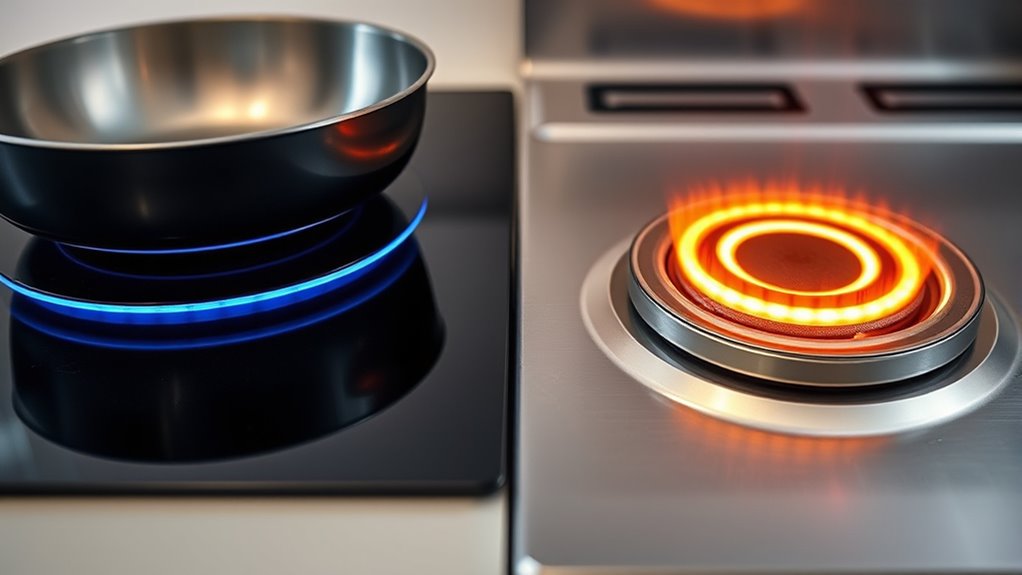
Induction and electric ranges both use electricity, but they create heat in different ways. When you turn on a traditional electric range, electricity flows through a metal coil or radiant element.
The element resists that current, becomes hot, and transfers heat to your cookware through direct contact. With a glass-top model, the heating element warms the surface first, which then warms the pan.
An induction range uses electromagnetic energy instead. A copper coil beneath the cooking surface creates a magnetic field when you select a setting.
A copper coil creates a magnetic field that heats compatible cookware directly through electromagnetic energy.
If you place compatible magnetic cookware on top, the field induces electrical currents in the pan itself. Those currents generate heat directly within the cookware, while the surrounding surface stays relatively cooler.
These heat transfer methods affect cooking efficiency, responsiveness, and cookware requirements. You’ll need induction-compatible pans for electromagnetic heating, whereas electric ranges can work with nearly any flat-bottomed cookware.
Both systems offer adjustable control, but their heat-generation processes remain fundamentally different.
Which Range Cooks Faster: Induction or Electric?

When speed matters, induction ranges usually boil water and heat food faster than electric ranges because they transfer energy directly into compatible cookware. You’ll notice nearly instant heat once you select a setting, while an electric coil or smooth-top burner needs time to warm up.
Induction also responds quickly when you raise or lower the temperature, giving you tighter control during sautéing, simmering, and searing.
Your cookware affects the result. Flat, magnetic pans generally heat most effectively on induction, while electric ranges accept a broader selection of pots and pans. Pan size, food quantity, and starting temperature also influence cooking speed on either range.
For everyday cooking efficiency, induction offers faster starts and more precise adjustments. However, electric burners retain heat after you turn them off, which can help finish delicate dishes but may slow temperature changes.
Maintenance requirements differ, too. Induction’s cooler surface usually makes spills easier to wipe away, while electric surfaces and coils may require more careful cleaning.
Which Range Saves More Energy and Money?

Beyond cooking speed, energy use can affect your utility bills. When you compare an induction range with a traditional electric range, induction generally wins on Energy efficiency.
It transfers electromagnetic energy directly to compatible cookware, so less heat escapes into your kitchen or the cooktop. Electric ranges heat a coil or radiant element first, then transfer that heat to the pan, creating more energy loss.
Your actual savings depend on cooking habits, electricity rates, and purchase prices. A Cost comparison should include the range’s upfront cost, expected lifespan, and daily operating expense.
Induction usually costs more initially, but its faster, more targeted heating can reduce electricity consumption over time. You’ll save the most if you cook frequently and use properly sized, flat-bottomed cookware.
If your budget is tight or you cook occasionally, a standard electric range may cost less overall despite lower efficiency. Check local utility rates and appliance energy data before choosing, because those details determine your potential long-term savings.
Which Range Is Safer to Use?
For everyday cooking, induction ranges are generally safer because the cooktop stays relatively cool while the pan heats directly. You’ll reduce burn risks from accidental contact, although the cookware and surrounding surface can still become hot.
Induction also stops heating when you remove a compatible pan, helping prevent unattended cooking accidents.
Induction stops heating when you remove compatible cookware, reducing the risk of unattended cooking accidents.
- Burn prevention: You’ll face fewer lingering hot spots than with traditional electric coils or radiant glass, but you should still use oven mitts and keep children away.
- Fire protection: Precise temperature control can limit overheating, while automatic shutoff features add another layer of cooking safety.
- Electrical awareness: Both range types require proper installation. You shouldn’t use damaged cords, overloaded circuits, or wet controls, since these create electrical hazards.
Electric ranges remain safe when you follow manufacturer instructions and maintain clear space around the burners.
Whichever model you choose, keep flammable items away, watch active pans, and test safety features regularly. Your habits matter as much as the technology.
What Do Induction and Electric Ranges Cost?
Induction ranges usually cost more upfront than standard electric ranges, but you may recover some of that difference through faster cooking and lower energy use. You’ll often pay more for induction because its magnetic technology requires specialized components and controls. Standard electric models generally offer a lower purchase price, making them attractive if you’re replacing a range on a tight budget.
Your total cost also depends on cooktop material. Glass surfaces appear on both types, but induction models may use thicker, higher-quality glass designed to handle precise heating.
Check installation requirements before you buy. Both ranges typically need a 240-volt circuit, though your kitchen might require updated wiring, a suitable outlet, or professional electrical work. Those upgrades can add *considerably* to the project.
You’ll also face differences in operating costs. Induction transfers heat more efficiently, potentially reducing electricity use, while electric coils or radiant elements may waste more heat. Compare warranties, cookware needs, and expected lifespan to estimate your real value.
Frequently Asked Questions
Are Induction Ranges Compatible With All Types of Cookware?
No, induction ranges aren’t compatible with every type of cookware. You’ll need pots and pans with magnetic compatibility, usually those made from cast iron or magnetic stainless steel.
Test a piece by placing a magnet against its base; if it sticks firmly, it should work. Nonmagnetic cookware, including pure copper, aluminum, glass, and ceramic, won’t heat unless it has a magnetic layer.
Always check the manufacturer’s labeling before purchasing cookware.
How Do You Clean and Maintain Induction and Electric Range Surfaces?
Ironically, your “self-cleaning” cooktop still needs you. For surface cleaning, let both induction and electric ranges cool, then wipe spills with a soft, damp cloth and mild cooktop cleaner.
Don’t use abrasive pads, harsh chemicals, or scrape aggressively. Lift stuck residue with a manufacturer-approved scraper.
Maintenance tips: dry surfaces thoroughly, clean spills promptly, avoid dragging cookware, and inspect cords or controls regularly. Follow your manual’s instructions for safe, lasting performance.
Do Induction Ranges Make Noticeable Noise During Operation?
Yes, you may notice operational sounds from an induction range, though they’re usually quiet. You might hear a low hum, buzz, clicking, or brief fan noise as the cookware and electronics adjust power.
Noise levels can vary with pan material, size, and cooking temperature. Lightweight or uneven pans often vibrate more.
Electric ranges generally operate more quietly, with only occasional clicks from temperature controls. These sounds are typically normal, not signs of damage.
Can Induction and Electric Ranges Work During Power Outages?
When the lights take an unscheduled break, neither induction nor electric ranges will work without electricity. You’ll need power backup, such as a generator or battery system, to operate either appliance during an outage.
A compatible backup can restore cooking, but check its wattage capacity first. Induction models often offer greater energy efficiency, using power more precisely, while standard electric ranges may draw substantial electricity.
Gas ranges can provide another option during outages, with proper ventilation.
Which Range Offers Better Temperature Control for Delicate Cooking?
You’ll get better temperature control for delicate cooking with an induction range. Its responsive electromagnetic heating lets you adjust heat quickly and maintain steady, low temperatures for sauces, custards, and melted chocolate.
An electric range’s element cycles on and off, creating more temperature swings and slower adjustments. However, cookware compatibility matters: you’ll need magnetic pans for induction.
If your favorite cookware isn’t compatible, electric may offer greater convenience despite less temperature precision overall.
Conclusion
Whether you choose induction or electric, you’re bringing dependable warmth to your kitchen. Induction gives you swift, precise cooking, cooler surfaces, and impressive efficiency, while electric ranges offer familiar performance and a gentler price tag.
Consider your cookware, budget, safety priorities, and cooking habits before deciding. With either option, you’ll enjoy a reliable partner for everyday meals and a kitchen that feels a little more welcoming.
When comparing induction vs electric ranges, the right choice is the one that best fits your cooking style and everyday needs.