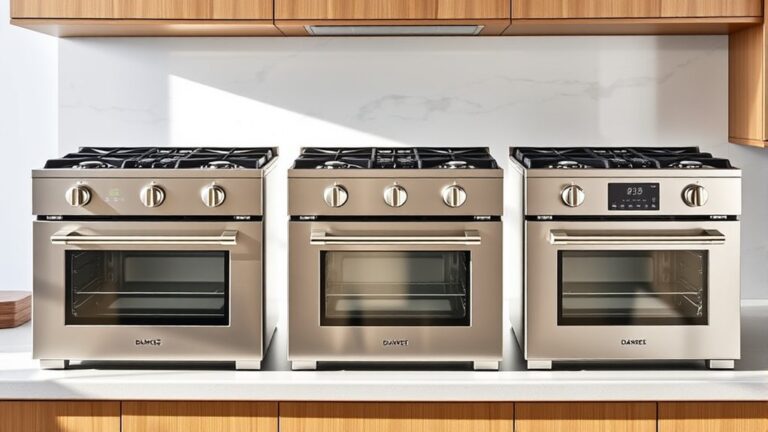
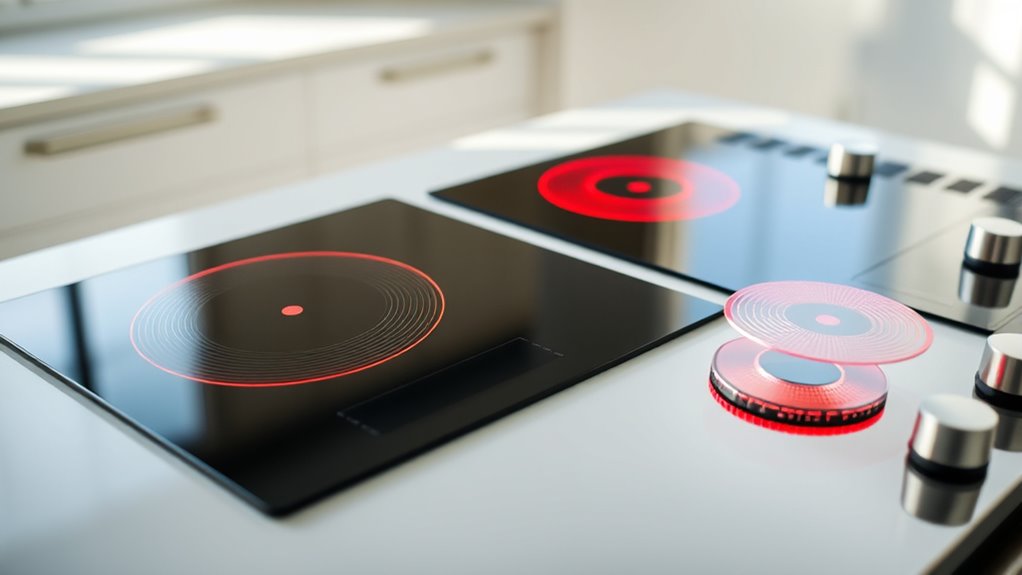
Induction Stove Versus Electric Stove: 7 Key Differences
Choosing between an induction stove and an electric stove can feel overwhelming, especially when you want faster cooking, lower energy bills, and a safer kitchen. You’re not alone—many people struggle to decide which option best fits their cookware, budget, and daily cooking habits.
Induction stoves heat magnetic cookware directly, so you’ll boil water faster, use less energy, and get more precise temperature control. Their cooler glass surfaces, pan detection, and automatic shutoff also improve safety and simplify cleanup.
Electric stoves cost less upfront, work with nearly any flat-bottomed pan, and suit budget-conscious cooks, but they heat more slowly and retain residual heat.
Consider your cookware, installation costs, cooking habits, and long-term energy savings before choosing the option that fits you best.
Key Takeaways
- Heating speed: Induction heats cookware directly and boils water faster, while electric stoves heat an element before transferring heat to the pan.
- Temperature control: Induction responds almost instantly and maintains steadier temperatures. Electric burners adjust more slowly and retain residual heat.
- Cookware compatibility: Electric stoves work with nearly any flat-bottomed cookware, while induction requires magnetic materials such as cast iron or compatible stainless steel.
- Safety and cleaning: Induction surfaces stay relatively cool and wipe clean easily. Electric surfaces remain hot and can bake on spills.
- Cost and efficiency: Induction costs more initially but uses less electricity and may provide greater long-term savings than conventional electric stoves.
How Induction and Electric Heating Work

Induction and electric stoves both use electricity, but they transfer heat in different ways. With an induction cooktop, electricity flows through a copper coil beneath the glass surface. The coil creates magnetic fields that interact with compatible cookware.
Those fields generate electrical currents inside the pan, causing the pan itself to heat. You place the cookware on the zone, and the energized metal transfers heat directly to the food. The glass remains relatively cooler because it doesn’t produce the heat.
An electric stove sends electricity through a resistance element, such as a coil or radiant ribbon. That element becomes hot and then passes heat to your cookware through direct contact. The pan subsequently heats your ingredients.
On a radiant model, the glass surface also absorbs and releases heat, so you’ll notice residual warmth after turning the control off. In both designs, your pan, its material, and its contact with the cooking surface influence heat transfer and responsiveness.
Which Stove Boils Water Faster?

Which stove boils water faster? In most kitchens, an induction stove wins. It transfers magnetic energy directly into compatible cookware, so your water often reaches a rolling boil in roughly half the time of a traditional electric stove.
An electric coil or smooth-top burner must first heat its element, then the pan, creating a slower response.
Electric burners heat in stages—first the element, then the pan—so they respond more slowly than induction.
You’ll notice the difference when you need pasta water quickly or refill a kettle during a busy meal. Results vary with wattage, pan size, lid use, and starting-water temperature.
- Induction hums beneath a dark, steady pot.
- Tiny bubbles race upward along the pan’s base.
- A red electric ring glows before boiling begins.
- Steam gathers quickly beneath a fitted lid.
- Pasta water surges sooner on induction.
Although speed often supports Energy efficiency, boiling time alone doesn’t measure total consumption. That comparison belongs in the next section.
Cooking flavor won’t change because water boils faster, but faster heating can make cooking feel smoother and more responsive. You’ll also gain precise heat control after boiling, helping you avoid overflow and scorching.
Which Stove Uses Less Energy?

| Stove type | Heat transfer | Typical energy result |
|---|---|---|
| Induction | Directly into cookware | Lower electricity use |
| Electric | Element, then cookware | More heat loss |
Induction may cost more initially, but reduced electricity use can help offset that price over time.
To save more, match your pan to the burner, cover pots, and turn the stove off as soon as you finish cooking. These habits reduce wasted energy with either option.
Which Stove Offers Better Temperature Control?
When comparing induction and electric stoves, you’ll notice a difference in how precisely you can adjust the heat. Induction cooktops change temperatures quickly, while electric burners tend to respond more slowly. As a result, induction usually maintains more consistent cooking temperatures, giving you better control.
Precise Heat Adjustments
Induction stoves generally offer more precise heat adjustments because they change the cookware’s temperature almost instantly when you raise or lower the setting. You’ll notice steadier simmering and finer control over delicate sauces than with traditional electric coils, which may keep radiating heat after you adjust them.
This accuracy can also support energy efficiency by directing heat into compatible cookware rather than warming the surrounding surface.
Picture how each option feels while you cook:
- Chocolate stays glossy instead of scorching.
- Soup simmers gently without violent bubbling.
- Rice cooks evenly at a controlled setting.
- Caramel develops gradually under close control.
- A warm pan remains predictable between adjustments.
Electric stoves still provide usable numbered settings, but their control depends more on residual warmth and cookware placement.
You’ll appreciate induction’s responsive precision, while safety features, such as cooler surrounding surfaces, add confidence during busy cooking.
Faster Temperature Changes
Faster temperature changes give induction stoves an advantage because they respond almost immediately when you adjust the setting, while electric coils take longer to heat up or cool down. With induction, magnetic energy heats your cookware directly, so heat transfer happens quickly and efficiently.
When you lower the setting, the pan reacts almost at once, helping you prevent scorching, boiling over, or overcooking. Electric stoves must first change the coil’s temperature, then transfer that heat through the pan, creating a noticeable delay.
This slower response can make delicate tasks, such as melting chocolate or reducing sauces, more difficult. Induction also supports better energy efficiency by directing power into the cookware instead of wasting as much heat around it.
Choose induction if you value rapid adjustments during active cooking.
Consistent Cooking Temperatures
For consistent cooking temperatures, induction stoves generally offer better control because they deliver precise, even heat directly to the cookware. You’ll notice sauces simmer steadily, chocolate melts smoothly, and delicate foods resist scorching.
Electric stoves can maintain heat, but their radiant coils or glass surfaces cycle on and off, creating hot spots and temperature swings.
- Your soup simmers gently without sudden boiling.
- Your pancakes brown evenly across the pan.
- Your sauce stays silky instead of sticking.
- Your rice cooks steadily with fewer surprises.
- Your chocolate melts without gritty, burned edges.
Induction also responds quickly when you adjust the setting, while electric burners retain heat after you turn them down. That lingering warmth can complicate precise recipes.
Although cooking noise may vary by model, it rarely affects temperature performance. You’ll also find that aesthetic appeal differs: induction offers a sleek, modern surface, while electric designs provide familiar simplicity.
Which Stove Is Safer to Use?
When it comes to safety, induction stoves generally have the advantage because they heat the cookware directly while keeping the cooking surface relatively cool. You’ll reduce the risk of accidental burns from the cooktop, although the pan and its contents can still become extremely hot.
Induction models also stop heating when you remove compatible cookware, helping prevent unattended cooking accidents. Many include automatic shutoff, pan detection, child locks, residual-heat indicators, and overflow protection. These safety features support user safety, especially when you’re cooking in a busy household.
Induction stoves enhance kitchen safety with automatic shutoff, pan detection, child locks, and overflow protection.
Electric stoves can still provide dependable protection, but their heating elements remain hot after you turn them off. You’ll need to watch the surface carefully and keep children away until it cools completely.
Both stove types require you to handle hot pans cautiously, keep flammable items away, and avoid leaving cooking unattended. If you prioritize a cooler surface and responsive controls, induction typically offers the safer everyday experience.
What Cookware and Cleaning Does Each Need?
Beyond safety features, your choice also affects which cookware you can use and how much cleaning the stove requires. Cookware compatibility matters immediately with induction: you’ll need magnetic pots and pans made from cast iron or compatible stainless steel.
Test a pan with a magnet; if it sticks firmly, it should work. Glass, copper, and ordinary aluminum won’t heat unless they include a magnetic base.
An electric radiant stove accepts almost any flat-bottomed cookware, although warped pans heat unevenly. For either surface, choose cookware that matches the burner size and lift it rather than sliding it to prevent scratches.
- Induction leaves the surrounding glass relatively cool, so spills usually don’t bake on.
- Radiant burners can scorch drips onto the hot surface.
- Wipe induction glass with a soft cloth after it cools.
- Clean radiant cooktops with a manufacturer-approved scraper and cleaner.
- Dry both surfaces to prevent streaks and residue.
Your cleaning maintenance routine stays simplest when you wipe spills promptly and avoid abrasive pads, harsh powders, and rough-bottomed pans.
Which Stove Offers Better Long-Term Value?
Induction usually costs more upfront, but its faster cooking, lower energy use, and responsive temperature control can provide better long-term value. You’ll typically spend less on electricity because induction transfers energy directly to your cookware, while conventional electric coils lose more heat.
Induction costs more initially but delivers faster cooking, lower energy use, and greater long-term value.
Over several years, those savings can narrow the initial price gap, especially if you cook frequently.
For a practical cost comparison, consider installation, cookware, energy bills, and expected lifespan. You may need induction-compatible pans, adding to your starting expense.
However, induction surfaces stay relatively cool, so spills don’t bake on and cleanup takes less effort. Their sealed, smooth design also reduces maintenance requirements because there are no exposed coils or drip pans to replace.
Electric stoves often cost less initially and work with nearly any cookware. They can deliver good value if you cook occasionally or have a tight budget.
Choose induction when efficiency, speed, safety, and long-term savings matter most. Choose electric when purchase price drives your decision.
Frequently Asked Questions
Can Induction Stoves Operate During Power Outages?
No, you can’t operate an induction stove during a power outage because it requires electricity to create its magnetic cooking field. For reliable power outage solutions, you’ll need a generator, battery power station, or suitable inverter capable of supporting the stove’s wattage.
Otherwise, consider emergency cooking options such as a gas camping stove, propane burner, charcoal grill, or outdoor fire pit. Always cook outdoors with ventilation and follow local safety guidelines to prevent carbon monoxide poisoning.
How Noisy Are Induction Stoves Compared With Electric Stoves?
Induction stoves usually sound slightly louder than electric stoves, but you’ll notice the difference mainly during quiet cooking. As the saying goes, “the proof is in the pudding”: Noise levels depend on your cookware, power setting, and cooling fan.
You may hear humming, buzzing, clicking, or fan noise from induction models. Electric stoves generally produce fewer appliance sounds, though sizzling and popping remain similar. Cooking sounds mostly come from your food.
Do Induction Stoves Emit Electromagnetic Radiation?
Yes, induction stoves emit low-frequency electromagnetic fields to heat compatible cookware, but they don’t produce ionizing radiation like X-rays. You’ll experience minimal radiation exposure during normal use, especially when you keep a few inches between your body and the cooktop.
For electromagnetic safety, use undamaged cookware that matches the cooking zone, follow the manufacturer’s instructions, and consult your doctor if you have an implanted medical device, such as a pacemaker.
What Installation Requirements Differ Between Induction and Electric Stoves?
Installation is the foundation beneath your cooking setup. For an induction stove, you’ll typically need a dedicated, properly sized power supply because it draws substantial electricity; some models require 240 volts and professional electrical work. You’ll also need compatible cookware, though that’s not an installation requirement.
A conventional electric stove generally uses similar voltage, but requirements vary by model. For countertop installation, make certain adequate ventilation, clearance, and a correctly sized opening.
Are Induction and Electric Stoves Available in Different Designs and Sizes?
Yes, you’ll find both induction and electric stoves in varied designs and sizes. Design variety includes freestanding ranges, slide-in models, drop-in units, and sleek built-in cooktops.
Size options commonly range from compact 24-inch models to standard 30-inch versions and larger 36-inch units. Induction cooktops often offer flexible, modern layouts, while electric models provide familiar coil or smooth-top surfaces.
You can choose configurations that fit your kitchen, cooking habits, and available space.
Conclusion
Choosing between an induction stove and an electric stove comes down to how you cook, clean, and budget. Induction boils water faster, wastes less energy, responds more precisely, and keeps the surface cooler, while electric models cost less upfront and work with more cookware.
Picture quick weekday meals, steady simmering, and effortless cleanup—or familiar pans, simple controls, and lower initial costs. Choose an induction stove for performance and an electric stove for simplicity. Either way, you’ll cook confidently every day.