
7 Key Differences Between Induction and Electric Cooktops
Choosing between an induction and electric cooktop can feel confusing, especially when you want fast cooking, easy cleanup, and good value. You’re not alone—many home cooks struggle to balance performance, safety, cookware compatibility, and cost.
Induction cooktops heat compatible pans directly, so you’ll usually get faster, more even results and lower energy use. Electric models heat elements first, making them slower but generally less expensive upfront.
You’ll need magnetic cookware for induction, while electric surfaces work with nearly any flat-bottomed pan.
Induction also stays cooler, improves safety, and simplifies cleanup, though both require care.
Your best choice depends on budget, cookware, cooking habits, and long-term costs. The key differences below can help you decide.
Key Takeaways
- Heating method: Induction uses electromagnetic energy to heat cookware directly, while electric cooktops heat coils or radiant elements beneath the pan.
- Speed and control: Induction generally heats faster and adjusts temperatures more quickly and precisely than electric cooktops.
- Energy efficiency: Induction wastes less heat, whereas electric cooktops lose energy through the heating element, glass surface, and surrounding air.
- Cookware compatibility: Induction requires magnetic cookware, while electric cooktops work with most flat-bottomed pots and pans.
- Safety and cleaning: Induction surfaces stay relatively cooler and stop heating when cookware is removed, making spills and cleanup easier.
Induction vs. Electric Cooktops: Which Is Better?
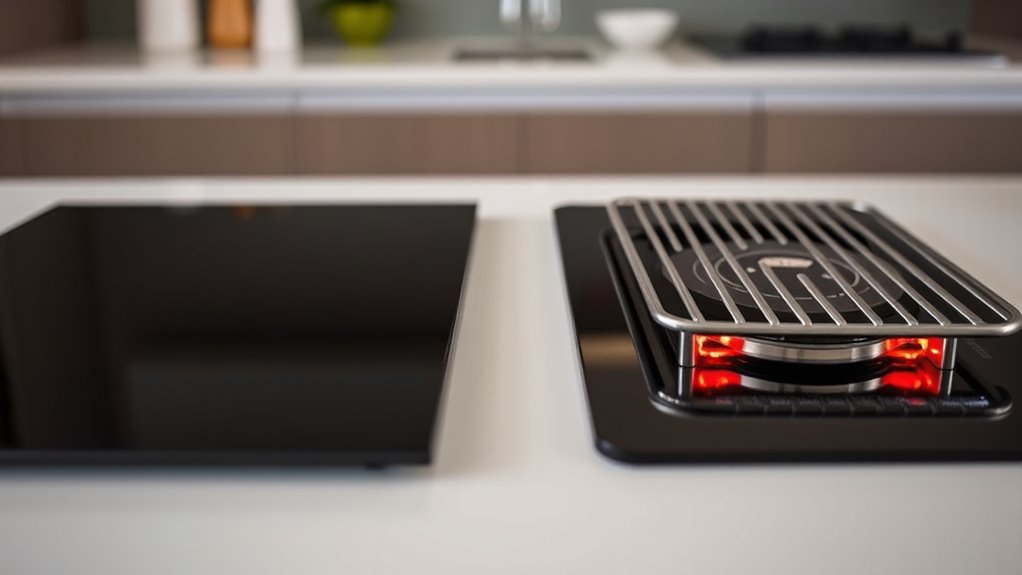
Choosing between induction and electric cooktops depends on your cooking habits, budget, and kitchen priorities. If you value speed, precise temperature control, and improved energy efficiency, induction may suit you better.
You’ll appreciate how quickly it responds when you adjust the controls, especially during delicate tasks such as simmering sauces or melting chocolate. Its smooth surface also offers strong aesthetic appeal and makes cleanup easier.
Electric cooktops often provide a lower purchase price, broader cookware compatibility, and straightforward operation. You won’t need magnetic pots and pans, so you can keep using your existing collection.
Radiant elements retain heat after switching off, which can help finish meals but requires extra caution.
For flavor amplification, either option can perform well when you control heat carefully and use quality ingredients. Choose induction if performance and efficiency outweigh upfront cost.
Choose electric if affordability, familiarity, and flexible cookware matter more to you. Your cooking style should make the final decision.
How Do Induction and Electric Cooktops Work?

To understand the difference, it helps to see how each cooktop creates heat. Induction cooktops use magnetic energy to heat compatible cookware directly. Electric models, on the other hand, heat a burner, which then transfers warmth to your pan. Next, we’ll walk through how both processes work and how they affect cooking performance.
Induction Heating Process
Induction cooktops heat cookware through an electromagnetic field rather than a glowing heating element. Beneath the glass surface, a copper coil carries alternating electrical current, creating magnetic fields that change rapidly.
When you place compatible cookware above the coil, the field induces electrical currents within the pan’s ferrous metal base. Resistance in that metal converts the currents into heat, so the cookware itself becomes the heat source.
You’ll notice quick, precise heating because energy transfers directly into the pan instead of traveling through an intermediate surface.
Cookware compatibility matters: choose pots and pans containing magnetic materials, such as cast iron or magnetic stainless steel. A simple magnet test can help you check a pan’s base.
The cooktop responds instantly when you adjust the setting or remove the cookware.
Electric Heating Process
Electric cooktops generate heat through electrical resistance in a heating element beneath or on the glass surface. When you select a setting, electricity travels through a metal coil or radiant ribbon, creating heat that transfers to your cookware.
The glass may glow red as temperatures rise, and residual heat can remain after you switch it off.
| Feature | What you experience |
|---|---|
| Heating element | Transfers radiant heat through the surface |
| Temperature control | Adjusts power through the user interface |
Unlike induction, this process heats the cooktop first, so cooking may respond more slowly and waste more energy. You’ll need compatible flat-bottomed pans that contact the surface evenly.
Cooling technology, such as fans or ventilation beneath the cooktop, helps protect internal components, but the glass still cools gradually. Always use caution around the hot surface.
Which Cooktop Heats Faster and More Evenly?

When it comes to heating speed, induction cooktops typically bring food to temperature faster than electric models. They also tend to heat more evenly because induction heats the cookware directly, while electric elements can create hot spots.
Knowing the difference can help you choose the cooktop that best suits your cooking style.
Heating Speed Comparison
Two key factors determine how quickly and evenly your cooktop heats: energy transfer and heat distribution. Induction usually wins the speed test because it energizes compatible cookware directly, boiling water noticeably faster than electric coils or radiant glass surfaces.
Electric models must first heat an element, then transfer that heat to your pan, so you’ll wait longer and experience slower adjustments. Compare them this way:
- Induction: You’ll reach cooking temperatures rapidly.
- Electric coil: You’ll get dependable heat, but preheating takes longer.
- Radiant electric: You’ll wait for the surface to warm and cool.
- Your choice: Consider speed, temperature regulation, and energy efficiency.
Induction also responds quickly when you lower the setting, helping you avoid scorched sauces and stressful timing. Electric cooktops can still serve you well if you value lower upfront costs and broad cookware compatibility.
Even Heat Distribution
Fast heating matters, but even heat distribution determines whether your food cooks consistently. With induction, the magnetic field heats your compatible pan directly, spreading energy across its base with impressive control. You’ll notice fewer hot spots, so sauces simmer evenly and vegetables brown more consistently.
Electric cooktops transfer heat from a radiant element through the Surface material and then into your cookware. Although newer glass-top designs perform better, the element’s concentrated location can create warmer centers and cooler edges.
Your pan’s size, flatness, and material also affect results. Heavy, flat cookware improves contact and steadies temperatures on either cooktop.
If you value precise cooking, induction usually offers the most uniform performance. You’ll also protect delicate items, including pottery, because controlled heating supports Pottery durability and reduces thermal shock.
Which Cooktop Uses Less Energy?
Induction cooktops use less energy than traditional electric cooktops because they transfer heat directly to your cookware instead of warming a burner first. That direct connection improves energy efficiency and helps you cook food faster.
Traditional electric models lose heat as the element warms the glass surface and surrounding air, so they typically require more power consumption for the same task. Your savings will depend on cooking habits, meal size, and local electricity rates, but the difference can add up over time.
- You’ll feel good knowing less energy escapes into your kitchen.
- You can boil water faster and spend less time waiting.
- You may notice lower utility costs after regular use.
- You’ll reduce wasted energy every time you prepare a meal.
Induction also responds quickly when you lower the setting, preventing unnecessary heat buildup. If reducing household energy use matters to you, its precise heating makes induction the more efficient choice.
Check the wattage and efficiency ratings of specific models before you buy, since performance can vary.
Will Your Cookware Work on Either Cooktop?
Cookware compatibility is one of the biggest differences between induction and traditional electric cooktops. An induction surface requires magnetic cookware, so your pots and pans must contain iron or steel. You can test a piece by holding a magnet against its base. If it sticks firmly, the cookware should work.
Cast iron, enameled cast iron, and many stainless-steel pans qualify, while aluminum, copper, glass, and nonmagnetic stainless steel usually don’t unless they include a magnetic layer.
Traditional electric cooktops offer broader compatibility. You can use most flat-bottomed cookware, including aluminum, copper, stainless steel, glass, and cast iron.
However, choose pans with smooth, even bases to promote stable heating and prevent scratches or uneven contact. Check each manufacturer’s recommendations before using specialty cookware.
Your cookware compatibility needs may affect your choice. Consider replacement costs, pan shape, and maintenance considerations, especially if you’ll need to replace a favorite set or adjust your cooking habits.
Which Cooktop Is Safer and Easier to Clean?
Your cookware choice also affects daily safety and cleanup. Induction cooktops generally offer stronger protection because the surface heats only when compatible cookware sits on the zone. When you remove the pan, heating stops, reducing accidental burns.
Induction cooktops improve kitchen safety by heating compatible cookware directly and stopping when you remove the pan.
Their surfaces stay cooler than electric coils or radiant elements, though residual heat remains. Electric cooktops still provide useful safety features, including hot-surface indicators and automatic shutoffs on some models.
For easier cleanup, both types have smooth glass surfaces, but induction usually wins because spills don’t bake onto an intensely hot zone as quickly. Let the surface cool, then use these cleaning methods:
- Wipe fresh spills promptly with a soft, damp cloth.
- Use a cooktop scraper for hardened residue, holding it nearly flat.
- Apply manufacturer-approved cleaner to remove grease without scratching.
- Dry and buff the surface to prevent streaks.
Avoid abrasive pads, harsh powders, and dragging heavy pans across either cooktop. If maximum burn protection and quick cleanup matter most, induction gives you the safer, simpler experience.
Which Cooktop Has the Lower Total Cost?
Although induction cooktops usually cost more upfront, they can lower long-term expenses through faster cooking and better energy efficiency. Because induction transfers heat directly to your cookware, you’ll typically use less electricity for each meal.
Over several years, those savings can offset the higher purchase price, especially if you cook often.
Electric cooktops usually offer the lower initial cost, making them attractive when you’re replacing an appliance quickly or working with limited funds. They’re also compatible with nearly any cookware, so you won’t need to buy new pots and pans.
However, slower heating and residual heat can increase energy use over time.
Your Budget considerations should include installation, cookware compatibility, electricity rates, repairs, and expected ownership length. If you plan to stay in your home and cook regularly, induction may deliver greater long term savings.
If you prioritize a low purchase price, electric remains the more economical choice. Compare total ownership costs before deciding.
Frequently Asked Questions
How Long Do Induction and Electric Cooktops Typically Last?
You can typically expect an induction cooktop to last 10–15 years, while an electric cooktop usually lasts 10–13 years. Your usage, installation quality, and care affect longevity.
For better energy efficiency, use properly sized cookware and avoid unnecessary high heat. Follow these maintenance tips: clean spills promptly, don’t drag pans across the surface, keep controls dry, and inspect cords or burners regularly.
Replace damaged components through a qualified technician.
Are Induction Cooktops Noisy During Operation?
Induction cooktops aren’t usually loud, but you may hear a soft hum, buzz, or clicking while cooking. Sound levels depend on your pan, heat setting, and cookware quality.
Noise sources include magnetic vibrations, cooling fans, and power cycling as the cooktop regulates temperature. Lightweight or uneven pans often create more sound.
You’ll generally notice the noise in a quiet kitchen, but it shouldn’t interfere with conversation or indicate a problem.
Can Induction and Electric Cooktops Be Installed in an Island?
Yes, you can install both induction and electric cooktops in an island, provided you plan for proper electrical connections, ventilation, countertop support, and clearances.
Induction usually offers greater installation flexibility because it needs no gas line and often has a sleek, low-profile design. Consider aesthetic details such as placement, surface materials, and visible controls.
You’ll also want professional installation to guarantee safe wiring, adequate airflow, and convenient access while cooking and cleaning daily.
What Cookware Alternatives Work With Induction Cooktops?
Stainless-steel, cast-iron, and enameled iron cookware work well with induction cooktops, provided they contain magnetic metal. You can also use magnetic carbon-steel pans and some multilayer stainless-steel pieces.
Check cookware compatibility by holding a magnet against the base. If it sticks firmly, the pan should heat. Avoid aluminum, copper, glass, and ceramic unless they include a magnetic layer.
Choosing compatible pans supports energy efficiency, faster cooking, and more precise temperature control.
Do Induction Cooktops Affect People With Pacemakers?
Yes, induction cooktops can potentially affect people with pacemakers, though modern devices often include shielding. Pacemaker interference may occur when you stand very close to the cooktop or lean over it while it operates.
Electromagnetic fields can disrupt some implanted cardiac devices, so you should check your pacemaker’s manufacturer guidance and ask your cardiologist for personalized advice. Keep a safe distance, use suitable cookware, and stop immediately if you notice symptoms.
Conclusion
Choosing between induction and electric cooktops comes down to your priorities. If you want speed, precise control, energy efficiency, and easy cleanup, induction’s likely worth the higher upfront cost—but you’ll need compatible magnetic cookware.
Electric cooktops remain budget-friendly and work with nearly any pan, though they heat and cool more slowly. Consider your cooking habits, kitchen setup, and long-term savings when comparing induction and electric cooktops.
Either way, you’ll cook confidently, even if your skillet seems straight out of the Stone Age.