

Uncover the Best Vocal Mic for Home Studio Like a Pro!
As an Amazon Associate, I earn from qualifying purchases. This post contains affiliate links. Which means I may earn a small commission when make a purchase through my links, at no additional cost to you.
Selecting the optimal condenser capsule, understanding polar patterns, and evaluating signal-to-noise ratio are critical elements when choosing the best vocal mic for home studio environments. As home recording setups become increasingly sophisticated, the demand for microphones that capture pristine vocal detail without introducing unwanted coloration or distortion has surged.
Navigating the myriad of available options—from large-diaphragm condensers to dynamic microphones—requires a deep dive into both technical specifications and real-world performance. For those seeking to elevate their vocal recordings, discovering the best vocal mic for home studio use is more intricate than it initially appears.
Read on to explore what truly sets the top contenders apart.
Elevate Your Sound: Top Picks to Capture Studio-Quality Vocals at Home
| Image | Product | Price |
|---|---|---|
Pick 1  | Audio-Technica AT2020 Cardioid Condenser Studio Microphone | Check Price On Amazon |
Pick 2  | RØDE NT1 Studio Condenser Microphone Black | Check Price On Amazon |
Pick 3  | Shure SM58 Pro Dynamic Vocal Microphone | Check Price On Amazon |
1. Audio-Technica AT2020 Cardioid Condenser Studio Microphone
Discover unmatched sound clarity with the Audio-Technica AT2020 Cardioid Condenser Studio Microphone, a top choice for home and project studios. Renowned for its exceptional price-to-performance ratio, this microphone delivers professional-grade audio capturing, making it an essential tool for aspiring vocalists and podcasters.
Designed with a custom-engineered low-mass diaphragm, the AT2020 provides an extended frequency response and superb transient handling. Its cardioid polar pattern isolates the intended sound source by reducing unwanted side and rear noise, ensuring crisp, clean recordings in any environment.
Pros
- High SPL handling and wide dynamic range for versatile recording applications
- Cardioid pattern enhances isolation by minimizing ambient noise
- Compatible with any recording program or audio interface using XLR connectivity
Cons
- Requires phantom power, which may necessitate additional equipment for some setups
Balancing affordability and professional quality, the Audio-Technica AT2020 stands out among entry-level condenser microphones. Those seeking the best vocal mic for home studio usage will appreciate its reliable performance and ease of integration, making it a smart investment for high-quality sound recording.
2. RØDE NT1 Studio Condenser Microphone Black
Discover professional-grade recording quality with the RØDE NT1 Studio Condenser Microphone Black, an exceptional choice for home studios. Renowned for its crystal-clear sound and whisper-quiet operation, this microphone brings studio-level vocal clarity and precision right to your personal setup.
Designed for vocalists and streamers, the NT1 features a large-diaphragm condenser capsule with a tight cardioid polar pattern that isolates your voice while minimizing room noise. Included accessories like a shock mount, pop filter, and XLR cable make it a complete vocal recording solution, ensuring a seamless connection to your audio interface.
Pros
- Extremely low self-noise of 4 dB enables pristine, clear recordings with minimal background interference.
- Comprehensive package includes SM6 shock mount, pop filter, XLR cable, and dust cover for professional use.
- Unidirectional cardioid pattern effectively captures vocals while rejecting unwanted ambient sounds, ideal for home studio environments.
Cons
- Requires an audio interface with phantom power, potentially adding to overall setup costs.
Combining legendary sound quality with thoughtful accessories, the RØDE NT1 stands out as one of the best vocal mics for home studios under $ Compared to similar microphones, it offers remarkably low noise levels and a full accessory bundle, making it a smart investment for serious vocalists and content creators.
3. Shure SM58 Pro Dynamic Vocal Microphone
Discover the Shure SM58 Pro Dynamic Vocal Microphone, a legendary choice for home studio vocalists seeking top-tier clarity and durability. Renowned for its warm, articulate sound and roadworthy build, it delivers professional-quality recordings and live performance results every time.
Engineered with a precision cardioid pickup pattern, the SM58 effectively isolates vocals while minimizing background noise and feedback. Its integrated pop filter and sturdy metal construction ensure clear, balanced sound and reliable performance, making it an essential tool for recording, podcasting, and broadcasting.
Pros
- Legendary vocal clarity with subtle midrange lift for warm, cutting vocals
- Precision cardioid pattern reduces noise and feedback for clean recordings
- Rugged, road-ready metal construction ensures long-term durability
Cons
- Requires XLR input and audio interface, limiting direct connection to some devices
For those seeking the best vocal mic for home studio use, the Shure SM58 Pro offers unmatched reliability and audio precision. Compared to similar dynamic microphones, it stands out for its combination of clarity, durability, and integrated pop protection, making it a smart investment for both beginners and professionals.
4. FIFINE T669 USB Condenser Microphone

Discover crystal-clear vocal recordings with the FIFINE T669 USB Condenser Microphone, designed specifically for home studio enthusiasts and podcasters. Combining simplicity with professional-quality sound, this USB microphone delivers outstanding audio performance without the need for extra hardware or drivers, making it the best vocal mic for home studio setups.
Equipped with a cardioid condenser capsule, the FIFINE T669 captures rich, detailed sound while minimizing background noise. Its rugged build includes a versatile boom arm stand with 180° rotation and an adjustable reach of up to 30, ensuring optimal positioning for any recording. The included double pop filter effectively reduces plosives, enhancing vocal clarity for podcasts, streaming, and voiceovers.
Pros
- Plug-and-play USB connectivity works seamlessly with PCs and laptops—no additional drivers needed.
- Durable steel boom arm stand with adjustable angles for customized recording setups.
- Double-layer pop filter reduces unwanted noise and plosive sounds for clear voice recordings.
- Wide frequency response (20Hz-20kHz) and high SPL handling for professional-grade audio capture.
- Includes comprehensive accessory package: shock mount, pop filter, USB cable, and detailed user manual.
Cons
- Incompatible with Xbox consoles, limiting use for gamers on that platform.
The FIFINE T669 USB Condenser Microphone offers exceptional value for creators looking to upgrade their home studio gear. Its ease of use, combined with professional sound quality and adjustable hardware, makes it a top contender compared to similar USB microphones like the Blue Yeti or Audio-Technica ATR2100, especially at its competitive price point.
5. MAONO A04 Gen2 XLR/USB Condenser Microphone Kit

Discover professional-grade audio quality with the MAONO A04 Gen2 XLR/USB Condenser Microphone Kit, designed for home studio enthusiasts seeking clear, rich vocals. Its versatile connectivity and advanced noise reduction features make it a top contender for the best vocal mic for home studio setups.
Equipped with both USB and XLR connectivity, the A04 Gen2 supports seamless plug-and-play recording across multiple devices. Featuring a 16mm electret condenser capsule and a cardioid polar pattern, it captures crystal-clear sound while minimizing ambient noise.
The included pop filter, shock mount, and adjustable arm stand ensure optimal recording conditions in any space.
Pros
- Dual USB and XLR connections offer broad device compatibility and professional flexibility.
- High-resolution 192kHz/24bit sampling captures studio-quality audio with rich detail.
- Advanced MAONO Link software enables customizable sound settings including noise reduction and EQ presets.
Cons
- XLR connection requires phantom power supply, which may not be readily available with all devices.
The MAONO A04 Gen2 stands out by delivering exceptional sound clarity and versatile usability, making it an excellent choice for podcasters, streamers, and home recording artists aiming for professional results without complex setups.
6. MAONO PD200W Hybrid Wireless Podcast Microphone

Experience unparalleled freedom and professional-grade audio quality with the MAONO PD200W Hybrid Wireless Podcast Microphone. Designed for creators seeking the best vocal mic for home studio setups, it offers versatile connectivity and crisp sound, elevating your podcasting, streaming, and recording sessions effortlessly.
Equipped with a premium 30mm dynamic capsule and cardioid pickup pattern, the PD200W captures clear vocals while minimizing background noise through advanced noise cancellation. Its hybrid design supports wireless, USB, and XLR connections, providing flexibility for any recording environment or device.
Pros
- Multiple connectivity options: wireless, USB-C, and XLR ensure compatibility with smartphones, computers, cameras, and audio interfaces.
- Dual-mic support with a single receiver enables seamless duo podcasting and independent track recording for precise editing.
- MaonoLink app allows real-time customization of EQ, reverb, and master presets, tailoring sound to diverse recording needs.
Cons
- Camera and Lightning accessories required for video sync recording are sold separately, potentially increasing setup costs.
With its exceptional audio clarity, robust battery life, and adaptable connection modes, the MAONO PD200W stands out as a versatile choice for creators demanding the best vocal mic for home studio use. Its combination of convenience and professional features ensures your voice always shines through, whether podcasting solo or collaborating.
7. Upgraded Studio Recording Condenser Microphone by Sound

Discover the perfect companion for your vocal recordings with the Upgraded Studio Recording Condenser Microphone by Sound. Designed for ease and superior audio quality, this USB microphone combines professional-grade sound capture with plug-and-play convenience, making it an ideal choice for home studio setups, podcasts, and streaming sessions.
Featuring a cardioid polar pattern and a 16mm diaphragm, this condenser mic delivers crisp, clear audio across a wide 30Hz–16kHz frequency range. Its multifunctional design includes echo control, volume adjustment, a mute button, and a 5mm headphone jack for seamless monitoring.
The included foldable isolation shield enhances sound quality by minimizing ambient noise, all within a compact, lightweight package that’s easy to transport and set up.
Pros
- High-fidelity audio with 192kHz/24Bit sampling for professional sound clarity
- Versatile features like echo control, volume adjustment, mute function, and headphone monitoring
- Foldable isolation shield with acoustic panels reduces background noise effectively
- USB connectivity ensures simple plug-and-play setup with PCs, laptops, and smartphones
- Compact and lightweight design eases portability and quick setup
Cons
- Frequency response tops at 16kHz, which may limit capture of ultra-high frequencies compared to some high-end mics
Balancing professional features with user-friendly design, the Upgraded Studio Recording Condenser Microphone offers outstanding value for home studio creators. It stands out against competitors by combining comprehensive sound control with noise reduction in a portable kit, making it an excellent investment for podcasting and vocal recording enthusiasts.
8. Audio-Technica AT2035 Cardioid Condenser Microphone

Discover the Audio-Technica AT2035 Cardioid Condenser Microphone, engineered for exceptional vocal clarity and precision in your home studio setup. Ideal for project and professional studio environments, this microphone combines superior sound isolation with natural audio reproduction, making it one of the best vocal mics for home studio use.
Featuring a large diaphragm and cardioid polar pattern, the AT2035 minimizes background noise while capturing smooth and detailed sound. Its high SPL handling and switchable 80 Hz high-pass filter enhance versatility, while the included custom shock mount ensures isolated, low-noise recordings.
Pros
- Cardioid pattern effectively reduces off-axis noise for crisp vocal capture
- High SPL capability and 10 dB pad allow recording of loud sources without distortion
- Durable build with custom shock mount enhances reliability and noise isolation
Cons
- Requires XLR interface and external phantom power, which may add to setup costs
Overall, the Audio-Technica AT2035 offers excellent sound quality and professional features at a competitive price point, making it a compelling choice for musicians and podcasters seeking the best vocal mic for home studio applications. Compared to other condenser mics in its class, it balances affordability with high-end performance and durability.
9. Audio-Technica AT2020 Cardioid Condenser Microphone Bundle

Elevate your home studio recordings with the Audio-Technica AT2020 Cardioid Condenser Microphone Bundle, a top choice for vocal clarity and professional sound quality. Designed to capture vocals with precision, this microphone bundle is ideal for project studios seeking reliable and versatile performance.
Featuring a custom-engineered low mass diaphragm, the AT2020 delivers extended frequency response and superior transient accuracy. Its cardioid polar pattern minimizes ambient noise by reducing side and rear sound pickup, ensuring focused isolation of your voice.
The bundle includes essential accessories like a pop filter, 20ft XLR cable, microphone arm, and cleaning cloth for convenient setup and maintenance.
Pros
- Low noise level of 20 dB SPL supports clear, distortion-free recordings.
- High SPL handling and wide dynamic range allow for versatile usage, from vocals to instruments.
- Comprehensive bundle with pop filter, microphone arm, XLR cable, and cleaning cloth enhances usability and protects your investment.
Cons
- Requires an audio interface with phantom power, which may add to overall cost for beginners.
Offering professional-grade sound capture at a competitive price point, the Audio-Technica AT2020 stands out as one of the best vocal mics for home studios. When compared to other condenser microphones in its range, it delivers superior noise isolation and accessory value, making it an excellent choice for aspiring musicians and podcasters.
10. Dmsky Microphone Isolation Shield
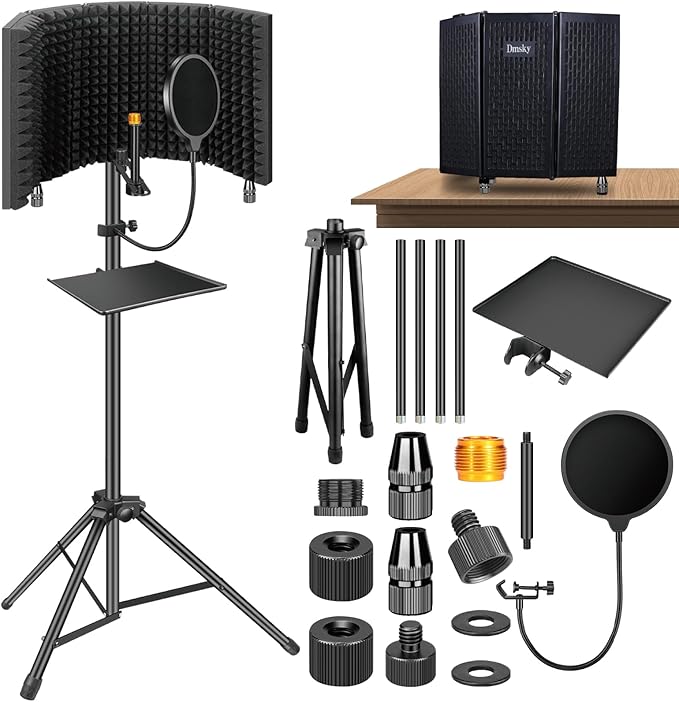
Enhance your home studio recordings with the Dmsky Microphone Isolation Shield, designed to deliver clear, professional-quality sound by minimizing unwanted ambient noise. Its triple-layer construction and adjustable design make it an essential accessory for those seeking the best vocal mic for home studio setups.
Featuring a high-density acoustic foam with reflective, filter, and absorbing layers, this mic isolation shield effectively reduces sound wave reflections and external interference. The durable steel adjustable stand offers flexibility for both seated and standing use, while included accessories like a pop filter and adapters ensure compatibility and improved voice clarity.
Pros
- Triple sound insulation layers significantly reduce ambient noise and echo for superior recording quality.
- Sturdy, height-adjustable steel stand suits various recording positions and environments.
- Easy to assemble with foldable panels and includes convenient accessories like a pop filter and adapter set.
Cons
- Large size may require adequate space in smaller studios or desk setups.
With its robust noise reduction capabilities and user-friendly design, the Dmsky Microphone Isolation Shield stands out as an excellent choice for home studio enthusiasts aiming for clear, professional vocal recordings. It offers great value compared to basic foam shields and is well-suited for both beginners and seasoned creators.
Top Picks for the Best Vocal Mic to Elevate Your Home Studio Sound
Type of vocal microphone
Understanding how your microphone integrates with your existing equipment can dramatically affect both convenience and sound quality. Microphones with USB connections offer plug-and-play simplicity, ideal for those who want to record directly into a computer without additional gear.
On the other hand, models with XLR outputs require an audio interface or mixer, but they unlock greater flexibility and higher fidelity, making them preferred by many professionals and enthusiasts alike.
Additionally, the internal design of the microphone plays a crucial role in its sonic character and application. Dynamic microphones are typically rugged and great at handling loud sound sources, making them reliable for various vocal styles without distortion.
| Microphone Type | Characteristics | Best Use |
|---|---|---|
| Dynamic | Durable, handles high SPL, less sensitive | Live vocals, loud sources, general-purpose recording |
| Condenser | Highly sensitive, captures detail and warmth | Studio vocals, acoustic instruments, detailed recordings |
The choice between tube and solid-state models further influences the tonal quality and warmth of your recordings. Tube microphones use vacuum tubes to introduce a subtle harmonic richness and natural compression, often favored for its vintage sound.
Solid-state microphones, meanwhile, rely on transistors to deliver a cleaner, more precise signal, which may be preferred for transparent and accurate reproduction.
Sound quality and frequency response
Having the right connection options and room for additional gear plays a crucial role in how effectively a microphone integrates with your home setup. Different mics come with varied input types—XLR, USB, or specialized adapters—that determine compatibility with audio interfaces, mixers, or computers. Ensuring the mic easily pairs with your existing equipment prevents frustrating delays and extra expenses down the line.
Furthermore, the ability to add accessories such as shock mounts, pop filters, or preamps can elevate recording quality and future-proof your investment as your studio evolves.
- Input type compatibility with your recording devices to avoid adapters or converters.
- Availability of additional ports or settings that allow connection to external hardware.
- Modular design enabling upgrades or enhancements without needing a complete replacement.
Compatibility with home studio equipment
Compatibility with home studio equipment plays a crucial role in ensuring smooth integration and optimal performance of a vocal microphone. The interface and preamp must match the mic’s requirements to deliver clear sound without distortion or unwanted noise. Some microphones demand phantom power, so verifying that your audio interface or mixer can supply this is essential to avoid additional gear and extra expenses.
Portability also matters, especially for those who may record in multiple locations; having versatile connection options like USB, XLR, or wireless capability can make setup easier and more flexible, adapting to various home studio environments with minimal hassle.
Build quality and design
Ensuring compatibility with your audio interface and available hardware is crucial for achieving optimal sound quality and ease of use. A microphone that offers flexible connection options, such as USB or XLR inputs, allows for effortless integration with various recording setups. Additionally, having room to add accessories or upgrade equipment without constantly replacing the mic enhances its longevity and versatility in your studio.
Budget and value for money
A key factor in ensuring a smooth workflow and future-proof setup lies in how a microphone interfaces with your recording gear and how it can adapt to growing studio needs. It’s essential to confirm that the mic’s connection type matches your audio interface or mixer, whether that’s XLR, USB, or another format, to avoid additional adapters or equipment.
Anticipating potential upgrades or changes in your studio setup helps maintain flexibility and prevents unnecessary expenses down the line, turning your initial choice into a smart, long-term asset rather than a short-lived entry-level tool.
Additional features
Many microphones come equipped with built-in filters or pads that help manage sound levels and reduce unwanted noise, which is especially useful for capturing clear vocals without distortion. The directionality and polar patterns of a microphone play a crucial role in how it captures sound from different angles, allowing for greater control over background noise and room acoustics. Additionally, ease of use and setup requirements can significantly impact your workflow; a mic that integrates smoothly with your existing equipment and doesn’t demand complex configurations will save time and make recording more enjoyable.
| Feature | Benefit | Consideration |
|---|---|---|
| Built-in Filters/Pads | Prevents distortion, handles high sound pressure | Check if the mic offers switchable options for flexibility |
| Directionality & Polar Patterns | Controls background noise, enhances vocal clarity | Choose a pattern suitable for your room and vocal style |
| Ease of Use & Setup | Simplifies integration, reduces setup time | Look for plug-and-play compatibility and clear controls |
FAQ’s
What Features Should I Look For In The Best Vocal Mic For A Home Studio?The best vocal mic for a home studio should have a clear and natural sound with a cardioid pickup pattern to minimize background noise. Additionally, look for a microphone with low self-noise and a wide frequency response to capture vocal detail accurately.
Which Microphones Offer The Best Sound Quality For Home Studio Vocals?Condenser microphones, such as the Neumann U87 or Audio-Technica AT4050, offer the best sound quality for home studio vocals due to their sensitivity and accuracy in capturing vocal nuances. Additionally, large-diaphragm condensers are preferred for their warm and detailed sound reproduction.
How Does The Price Of A Vocal Mic Affect Its Performance In A Home Studio Setup?The price of a vocal mic often reflects its build quality, sensitivity, and sound clarity, with higher-priced mics typically offering better noise reduction and more accurate sound capture. However, in a home studio setup, even mid-range mics can deliver excellent performance if paired with proper acoustic treatment and recording techniques.
Are Condenser Microphones Better Than Dynamic Microphones For Home Vocal Recording?Condenser microphones are generally better for home vocal recording because they capture a wider frequency range and greater detail, resulting in clearer, more accurate sound. However, dynamic microphones can be preferable in untreated rooms due to their durability and lower sensitivity to ambient noise.
What Are The Top Recommended Vocal Microphones For Beginners In A Home Studio?The top recommended vocal microphones for beginners in a home studio include the Audio-Technica AT2020, Shure SM58, and Rode NT1-A, known for their affordability and quality. These mics offer clear sound capture and durability, making them ideal for novice recording setups.
Conclusion
In summary, choosing the best vocal mic for your home studio depends on your budget, vocal style, and recording environment. Popular choices like the Audio-Technica AT2020, Rode NT1-A, and Shure SM7B offer excellent sound quality and versatility.


