
Top 5 Best Home Solar Battery Backup Solutions Revealed!
As an Amazon Associate, I earn from qualifying purchases. This post contains affiliate links. Which means I may earn a small commission when make a purchase through my links, at no additional cost to you.
The integration of advanced lithium-ion cells, coupled with intelligent energy management systems, has revolutionized the way residential solar setups store and utilize power. As solar photovoltaic (PV) arrays generate electricity during peak sunlight hours, the ability to efficiently capture and store surplus energy in a reliable home solar battery backup system becomes critical for maximizing self-consumption and ensuring uninterrupted power supply during grid outages. Factors such as battery capacity, depth of discharge (DoD), round-trip efficiency, and lifecycle significantly influence the performance and longevity of these energy storage solutions.
Exploring the best home solar battery backup options reveals how cutting-edge technology can enhance energy independence, reduce utility costs, and contribute to a sustainable lifestyle. Delving deeper into these aspects will uncover the key considerations that make certain battery systems stand out in the residential market.
Power Your Home Smoothly When the Grid Goes Dark
| Image | Product | Price |
|---|---|---|
Pick 1  | Jackery Explorer 300 Portable Power Station | Check Price On Amazon |
Pick 2  | Jackery HomePower 3600 Plus Power Station | Check Price On Amazon |
Pick 3  | Portable Solar Generator 300W Power Station with 60W Panel | Check Price On Amazon |
1. Jackery Explorer 300 Portable Power Station
Discover reliable, lightweight power on the go with the Jackery Explorer 300 Portable Power Station. Perfectly designed for outdoor enthusiasts and emergency backup needs, it combines portability with impressive capacity, ensuring your essential devices stay charged wherever life takes you.
Weighing just 5 lbs, the Explorer 300 packs a robust 292Wh capacity and multiple output options including AC outlets, USB-C PD, and a car port. Its advanced LiFePO4 battery technology delivers over 4,000 charge cycles for long-lasting use, while fast solar charging compatibility keeps you powered off-grid.
Pros
- Ultra-lightweight design with integrated handle for easy portability during outdoor adventures
- Versatile outputs supporting up to 6 devices simultaneously, suitable for laptops, cameras, and CPAP machines
- Durable LiFePO4 battery offering 4,000+ charge cycles, ensuring over a decade of reliable power
Cons
- Solar panel sold separately, requiring additional purchase for fully solar-powered operation
Combining efficiency, longevity, and portability, the Jackery Explorer 300 stands out as a top choice for anyone needing dependable off-grid power. While similar models may offer higher capacities, its balance of weight, power, and quick solar recharge makes it an excellent all-rounder for outdoor and emergency use.
2. Jackery HomePower 3600 Plus Power Station
Power your home reliably through outages and emergencies with the Jackery HomePower 3600 Plus Power Station. Combining impressive capacity and safe, long-lasting battery technology, it offers an efficient and portable backup solution designed to keep essential appliances running smoothly.
Delivering a robust 3600W output and expandable capacity up to 43kWh with multiple units, this power station supports dual voltage (120V & 240V) to operate pumps, heaters, dryers, and more. Its advanced LFP battery cells ensure safety under extreme conditions and provide a lifespan of over 6,000 cycles, all within a lightweight, wheeled design for easy portability.
Pros
- High 3600W output with dual voltage support, expandable for larger needs
- Exceptional battery safety using high-temp resistant ceramic membrane cells tested up to 302 °F
- Multiple fast charging options including hybrid AC+DC, solar, and gas generator compatibility
Cons
- Premium price point may be a consideration for budget-conscious buyers
For those seeking the best home solar battery backup that combines power, safety, and portability, the Jackery HomePower 3600 Plus stands out as a top-tier choice. Its versatile charging methods and robust construction make it a dependable companion for any household emergency or off-grid lifestyle.
3. Portable Solar Generator 300W Power Station with 60W Panel
Discover reliable off-grid power with the Portable Solar Generator 300W Power Station, featuring a high-efficiency 60W foldable solar panel. Perfect for camping and emergency backup, it ensures your essential devices stay charged wherever you go, combining portability with versatile charging options for outdoor enthusiasts and home users alike.
Equipped with dual 300W AC outlets, multiple USB ports including quick charge, and a 12V car port, this solar power station covers a wide range of devices from smartphones to laptops. Its built-in battery management system safeguards against overloads, while the included 60W monocrystalline solar panel offers fast, efficient recharging even in less-than-ideal lighting conditions.
Pros
- Multiple output options ensure compatibility with various electronics and camping gear.
- High conversion efficiency solar panel (20.5%) maximizes charging performance.
- Advanced safety features including short circuit, overload, and thermal protection.
Cons
- Not suitable for devices exceeding 300W, limiting use with high-power appliances like hair dryers or coffee makers.
Ideal for outdoor adventures and as a home backup option, this portable solar generator efficiently bridges the gap between power needs and mobility. Its comprehensive safety systems and included solar panel make it a smart, eco-friendly alternative to traditional generators, standing out among competitors for versatility and ease of use.
4. Anker SOLIX S2000 Portable Power Station
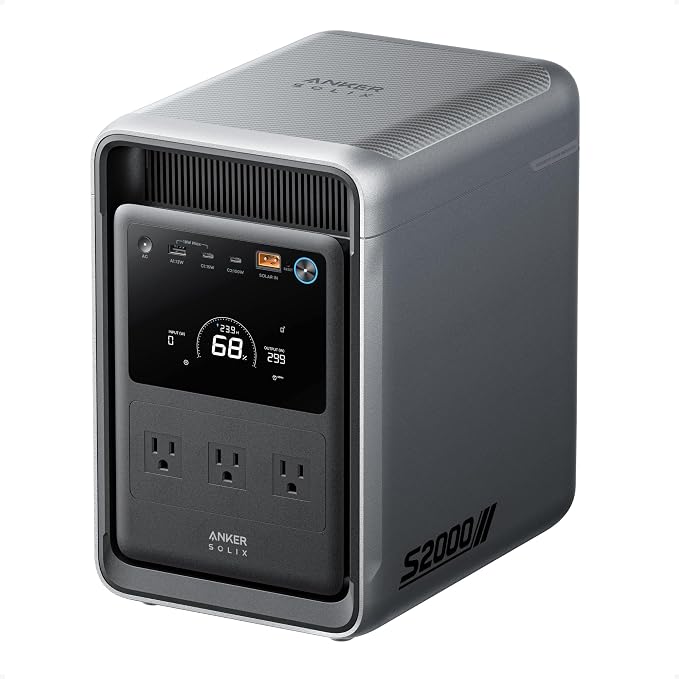
Discover the Anker SOLIX S2000 Portable Power Station, a compact and durable energy solution designed to keep your home essentials running during power outages. With impressive runtime and versatile charging options, it’s engineered for reliability whether camping, working from home, or handling emergencies.
Equipped with a robust 314Ah LFP battery, the unit delivers 1500W continuous output and up to 3000W peak power, sustaining your fridge for up to 35 hours. Its lightweight, space-saving design supports six distinct recharge methods, including solar panels up to 400W, ensuring power availability anywhere.
Pros
- Extended 10,000-cycle battery life with LFP cells guarantees 15 years of dependable use.
- Compact size and 25% lighter build than industry standards enhance portability and storage.
- Multiple charging options, including AC, solar, generator, and car outlets provide unmatched flexibility.
Cons
- Lacks a 12V DC port, which may limit compatibility for certain devices.
Combining longevity, power capacity, and versatile recharging in a sleek form, the Anker SOLIX S2000 stands out among the best home solar battery backups. Its innovative features and seamless UPS integration make it a smart choice for uninterrupted home energy support.
5. Jackery HomePower 3000 Portable Power Station with Solar Panels

Experience uninterrupted power at home with the Jackery HomePower 3000 Portable Power Station, designed to keep your essential appliances running smoothly during outages. Boasting high capacity and rapid recharge capabilities, it offers a dependable energy solution for emergencies and outdoor adventures alike.
Delivering a robust 3600W continuous output (7200W surge) and a spacious 3072Wh battery, this power station supports multiple devices simultaneously through versatile AC, USB-C, USB-A, and DC ports. Its UL-certified UPS switches seamlessly in less than 20ms, ensuring no interruption to security systems, medical equipment, or home connectivity.
Pros
- High-capacity LiFePO4 battery with 4,000 life cycles maintaining 70% capacity for long-term reliability
- Fast hybrid recharge options including solar panel compatibility, AC outlet, car charger, and gas generator integration
- Compact and lightweight design with advanced CTB technology, improving portability without sacrificing power
Cons
- Solar panels and power station are shipped separately, which may require additional setup time and coordination
The Jackery HomePower 3000 stands out as a top choice for reliable home solar battery backup, offering exceptional performance and flexibility. Its advanced technology and swift power switching make it a sound investment for anyone seeking peace of mind during power interruptions or pursuing off-grid energy solutions.
6. Jackery Explorer 1000 v2 Portable Power Station

Discover reliable, portable power with the Jackery Explorer 1000 v2 Portable Power Station. Designed for outdoor adventures and emergency readiness, this compact yet powerful unit delivers 1,500W output and fast charging in a lightweight, user-friendly package.
Equipped with a 1,070Wh LFP battery, it supports multiple devices simultaneously through USB-C, USB-A, DC car, and three AC pure sine wave outlets. Advanced ChargeShield 0 technology ensures safe and smart charging, while the Jackery App enables convenient power mode control and emergency rapid charging.
Pros
- High Power Output: 1,500W continuous with 3,000W surge supports essential appliances easily.
- Fast and Smart Charging: 0-100% charge in just one hour using the emergency charge mode.
- Durable and Long-lasting: LFP battery maintains 70% capacity after 4,000 cycles, ensuring over 10 years of use.
Cons
- Solar Panels Sold Separately: Compatible only with Jackery solar panels, which are not included.
For those seeking the best home solar battery backup with versatility and efficiency, the Jackery Explorer 1000 v2 stands out as a durable, fast-charging power solution. While it requires separate solar panels for solar charging, its lightweight design and multi-port output make it a top choice for both emergency and recreational power needs.
7. Jackery Solar Generator 300 with 40W Solar Panel

Discover uninterrupted power on your adventures with the Jackery Solar Generator 300 with 40W Solar Panel. This ultra-lightweight, portable generator offers reliable energy for camping, emergencies, and off-grid use, combining compact design with advanced battery technology for efficient, long-lasting performance.
Featuring a 300W rated output with a 600W surge capacity, the Explorer 300 effortlessly powers laptops, drones, and small appliances. Equipped with multiple ports—including AC outlets, USB-C PD, USB-A, and a car port—it provides versatile charging options. Its durable LiFePO4 battery supports over 4,000 cycles, ensuring a decade of dependable use.
Its durable LiFePO4 battery supports over 4,000 cycles, ensuring a decade of dependable use.
Pros
- Extremely lightweight at 7.5 lbs, making it easy to carry for outdoor activities
- Fast solar charging capability with included 40W panel and compatibility with higher wattage panels
- Long battery lifespan with premium LiFePO4 technology, providing over 11 years of service
Cons
- The solar panel and generator may ship separately, requiring initial setup
For anyone seeking the best home solar battery backup that blends portability, efficiency, and longevity, the Jackery Solar Generator 300 is a solid choice. It stands out among compact solar generators by balancing power output and convenience, making it essential for both outdoor enthusiasts and emergency preparedness.
8. Solar Powered Generator 100W Portable Power Station

Experience reliable and eco-friendly power anywhere with the Solar Powered Generator 100W Portable Power Station. Designed to deliver efficient solar energy conversion and versatile charging options, it’s your perfect companion for camping, emergencies, and off-grid adventures.
Equipped with high-efficiency 40W monocrystalline solar panels and a 146Wh capacity battery, this compact power station supports up to 7 output ports including AC, USB, and DC connectors. Lightweight and portable, it ensures seamless device charging with built-in safety features and a handy dual LED flashlight.
Pros
- High conversion efficiency solar panels (20.5%) perform well even in low-light conditions.
- Multiple output ports (7 total) including AC outlets and Quick Charge USB to power a variety of devices.
- Compact and lightweight design (3.3 lbs) fits easily into backpacks for ultimate portability.
Cons
- Maximum continuous output limited to 100W, which may restrict powering high-demand appliances.
Combining portability, effective solar charging, and versatile power options, this unit is an excellent choice among the best home solar battery backups for those needing reliable energy on the go. Its safety system and practical features stand out compared to many similar models.
9. Anker SOLIX C1000 Gen 2 Portable Power Station

Experience uninterrupted power wherever life takes you with the Anker SOLIX C1000 Gen 2 Portable Power Station. Designed for reliability and convenience, it excels as a best home solar battery backup solution, perfect for emergency preparedness, outdoor adventures, and off-grid living.
Delivering an impressive 2,000W output through 10 versatile ports and equipped with a robust 1,024Wh battery, this compact station recharges ultra-fast in just 49 minutes using HyperFlash technology. Its durable design supports up to 4,000 cycles while enabling solar recharging in under two hours, making it a top contender for portable power needs.
Pros
- Ultra-fast 49-minute recharge via upgraded HyperFlash technology with support through the Anker app for seamless control.
- High-capacity 2,000W output (3,000W peak) across 10 ports to power multiple devices simultaneously including sensitive electronics with 10 ms UPS backup.
- Compact and lightweight design, 14% smaller and 11% lighter than comparable models, enhancing portability for travel, camping, or everyday home use.
- Long-lasting battery endurance rated for 10 years and 4,000 cycles, retaining at least 80% capacity.
- Fast 1.8-hour solar recharging capability supports sustainable off-grid power for tiny homes and remote locations.
- Smart TOU mode via Anker app optimizes energy use to reduce peak electricity costs and monitor usage remotely.
Cons
- While highly portable, the price point of $499 may be higher than basic power stations, but the advanced features justify the investment for serious users.
For those seeking robust and flexible backup power, the Anker SOLIX C1000 Gen 2 combines efficient solar recharging, rapid power delivery, and smart management into a compact package unmatched by many alternatives. It stands out as a reliable choice for home emergency systems and adventurous lifestyles alike.
10. MARBERO Portable Power Station 88Wh

Experience reliable, portable power with the MARBERO Portable Power Station 88Wh—an ideal solution for camping, emergency backup, and outdoor adventures. Compact yet powerful, it offers efficient charging and multiple output options, ensuring your devices remain charged wherever you go.
Featuring eight versatile output ports including AC, DC, USB, and USB-C PD, the power station supports simultaneous charging of various devices from laptops to car refrigerators. Its fast-charging capability reaches 80% in just two hours, and the integrated Battery Management System safeguards against overheating, overcharging, and short circuits.
Pros
- Efficient 2-hour fast charging with included adapter or compatible solar panels for off-grid power.
- Compact and lightweight design (3.2 lbs) with ergonomic handle for easy portability.
- Multi-functional LED lighting with SOS mode provides valuable safety features during emergencies.
Cons
- Capacity limited to 88Wh, which may not support prolonged use of high-power appliances.
Combining portability, robust safety features, and versatile charging options, the MARBERO Portable Power Station 88Wh offers excellent value as a compact home solar battery backup and travel companion. While slightly lower in capacity compared to larger models, its fast charge and multi-port design make it a smart choice for everyday reliability.
Power Your Peace of Mind: The Ultimate Guide to Choosing the Best Home Solar Battery Backup
Battery capacity and power output
Energy storage capacity is measured in watthours (Wh) or kilowatthours (kWh), which indicate how much electricity a battery can hold and deliver over time. Peak power rating refers to the maximum amount of power a battery can supply in a short burst, while continuous power rating is the level it can maintain steadily without overheating or damage.
It’s essential to evaluate these ratings carefully to ensure the system can handle your home’s power demands during both regular usage and sudden surges. Additionally, aligning the battery size with your household’s typical energy consumption helps avoid running out of power during outages and maximizes the usefulness of stored energy.
Battery chemistry and lifespan
Different battery chemistries offer varying advantages and limitations that directly impact performance and durability. Lithium-ion batteries, for example, are known for their high energy density, longer cycle life, and deeper depth of discharge, allowing for more usable capacity compared to lead-acid batteries.
Considering the cycle life, which refers to how many charge and discharge cycles a battery can handle before its capacity significantly declines, is crucial for ensuring long-term reliability. Depth of discharge also plays a key role, as batteries that tolerate deeper discharges without damage provide more usable energy per cycle.
Additionally, reviewing the warranty terms and expected operational lifespan gives insight into the manufacturer’s confidence in the product’s longevity, helping to avoid unexpected replacements or failures down the line.
Compatibility with solar systems and inverters
Seamless integration with your existing solar panels ensures that the energy storage system operates efficiently and maximizes power usage. It is essential to verify that the battery backup supports the inverters already installed, as compatibility with various inverter models and technologies like hybrid or AC-coupled systems can affect overall performance. Additionally, having the option to increase battery capacity over time allows for greater energy independence and adaptability to changing power needs without replacing the entire setup.
Additionally, having the option to increase battery capacity over time allows for greater energy independence and adaptability to changing power needs without replacing the entire setup.
| Aspect | Importance | Considerations |
|---|---|---|
| Integration with Solar Panels | Ensures efficient energy flow | Check compatibility and wiring requirements |
| Inverter Compatibility | Affects system performance | Support for various inverter types and communication protocols |
| Scalability | Allows future capacity upgrades | Modular design and ease of adding additional batteries |
Installation and maintenance requirements
Modern solar battery systems come with options for either professional setup or DIY installation, each with distinct implications. Professional installation ensures optimal safety and system efficiency, often including warranties and expert advice on ideal placement, while DIY approaches might reduce upfront costs but require careful attention to electrical codes and personal expertise.
Routine upkeep involves periodic checks to maintain battery health and system reliability. Many units offer smart monitoring features, allowing homeowners to track performance and receive alerts about potential issues remotely.
Establishing a maintenance routine not only preserves battery life but also helps avoid unexpected outages, making it essential to understand these operational aspects before settling on a system.
Safety features and certifications
Reliable home energy storage systems often come equipped with built-in protection mechanisms such as safeguards against overcharging and short circuits, which help prevent damage to both the battery and connected devices. Adherence to recognized fire safety standards and certifications ensures that the unit meets stringent guidelines aimed at reducing fire risks, providing peace of mind in daily use.
Cost and financial incentives
Understanding the upfront costs alongside the potential long-term savings plays a crucial role in maximizing the value of a solar battery system. Initial expenses can vary widely depending on the system’s capacity and features, but these are often offset over time through reduced electricity bills and increased energy independence. Additionally, many regions offer tax credits and rebates that substantially lower the effective cost, making the investment more accessible and appealing.
| Factor | Impact on Investment |
|---|---|
| Upfront Cost | Initial financial outlay required to install the system |
| Available Tax Credits and Rebates | Reductions that lower overall expenditure and improve affordability |
| Return on Investment (ROI) | Measure of how much net gain is realized over the system’s life |
| Payback Period | The length of time before savings equal initial costs |
By evaluating these elements together, homeowners can better anticipate how long it will take to recoup their initial investment and begin enjoying net positive savings. This approach ensures a clearer understanding of financial benefits and helps in planning for energy independence with confidence.
FAQ’s
What Are The Top-Rated Home Solar Battery Backup Systems Available In 202Some of the top-rated home solar battery backup systems available in 2024 include the Tesla Powerwall 3, LG Chem RESU, and the Enphase Encharge 10. These systems are known for their high capacity, reliability, and seamless integration with solar panel setups.
How Do Home Solar Battery Backups Improve Energy Efficiency And Reliability?Home solar battery backups improve energy efficiency by storing excess solar energy for later use, reducing reliance on the grid and minimizing energy waste. They enhance reliability by providing a continuous power supply during outages, ensuring consistent access to electricity.
What Factors Should Be Considered When Choosing The Best Solar Battery Backup For A Home?When choosing the best solar battery backup for a home, consider factors such as battery capacity, lifespan, and compatibility with your solar system. Additionally, assess the battery’s efficiency, cost, and the reliability of the manufacturer.
How Much Does It Typically Cost To Install A Solar Battery Backup System For Residential Use?Installing a solar battery backup system for residential use typically costs between $7,000 and $15,000, depending on battery capacity and installation complexity. Additional factors such as brand, warranty, and local incentives can also influence the overall price.
What Are The Benefits And Drawbacks Of Lithium-Ion Versus Lead-Acid Batteries For Home Solar Energy Storage?Lithium-ion batteries offer higher energy density, longer lifespan, and faster charging, making them more efficient for home solar energy storage. However, they are more expensive upfront compared to lead-acid batteries, which are cheaper but bulkier, have shorter lifespans, and require more maintenance.
Conclusion
In summary, choosing the best home solar battery backup ensures reliable power during outages and maximizes your solar energy use. Factors like capacity, efficiency, and compatibility with your system are key.