7 Key Above Range Microwave Dimensions to Know
As an Amazon Associate, I earn from qualifying purchases. This post contains affiliate links. Which means I may earn a small commission when make a purchase through my links, at no additional cost to you.
Choosing an above-range microwave can be tricky when you’re unsure whether it will fit your kitchen. You’re not alone; many people struggle to balance the right dimensions, cabinet clearance, and ventilation. These 7 key above range microwave dimensions to know can help you find a model that fits and works well.
You’ll want to know seven key dimensions for your above-range microwave: standard width (usually 30 inches to match your range), height (16–18 inches typical), depth (14–16 inches), clearance above and below (at least 13–16 inches above the stovetop), plus door swing and handle space to guarantee easy access. Don’t forget duct size, usually 3-inch or 4-inch ducts, for proper ventilation and safe operation. Mastering these guarantees a perfect fit and smooth installation, and there’s more to uncover for an ideal setup.
Key Takeaways
- Standard above-range microwaves typically measure 30 inches wide, aligning with standard range widths for easy installation.
- Typical microwave height ranges from 16 to 18 inches, requiring proper space clearance above the stovetop.
- Depth usually falls between 14 and 16 inches, ensuring alignment with cabinetry and sufficient clearance for door operation.
- Vent duct sizes commonly are 3¼” x 10″ rectangular or 6″ round, matching manufacturer specifications for optimal airflow.
- Installation space must allow 13 to 16 inches clearance between stovetop and microwave bottom for safety and ventilation.
Standard Width for Above Range Microwaves
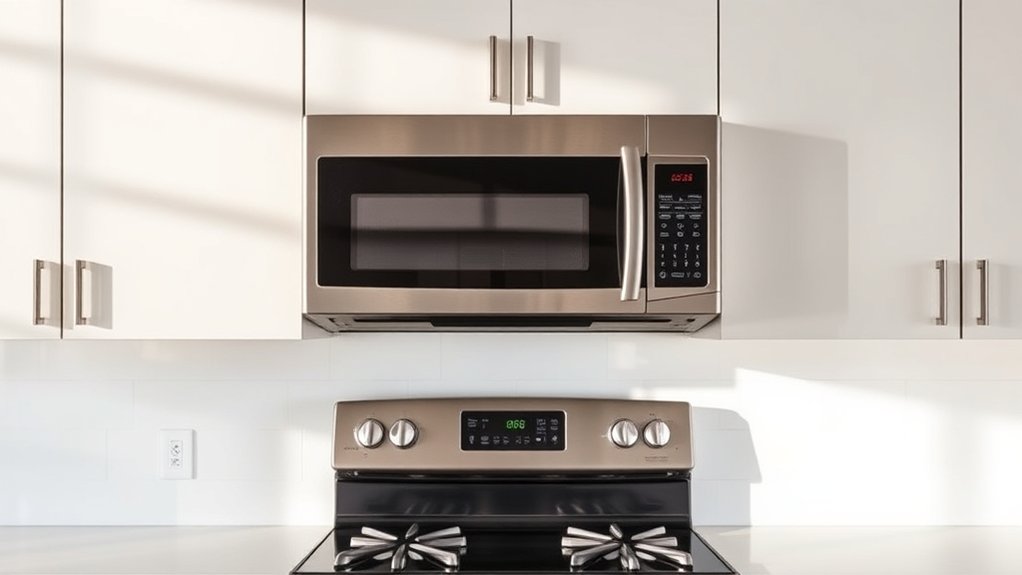
How wide should your above range microwave be? Generally, most above range microwaves come in a standard width of 30 inches, designed to fit seamlessly over a standard 30-inch range. This size ensures compatibility with common kitchen layouts, making your installation height more straightforward and consistent.
When choosing your microwave, keep in mind that the width directly affects venting options. A properly sized microwave aligns well with your stovetop, allowing effective ventilation whether you opt for recirculating vents or external ducting.
If your range is narrower or wider, you might find microwaves in 24 or 36-inch widths, but these are less common. Choosing the correct width simplifies installation height planning and maximizes space efficiency.
Microwave Height and Installation Fit

Microwaves typically range from 16 to 18 inches tall, so make sure your installation space can accommodate that height. Measure both the microwave and the available area to help ensure a proper fit and avoid installation issues.
Standard Microwave Height
Wondering what height your microwave should be to fit perfectly? Standard microwave heights typically range between 16 to 18 inches. This size ensures it fits above your range without crowding your cooking space.
While two word ideas like “oven clearance” or “cabinet space” are relevant, be careful not to mix in irrelevant topics such as countertop dimensions here. Knowing these measurements helps you avoid installation problems and ensures safety.
| Microwave Model | Height (inches) | Recommended Fit (above range) |
|---|---|---|
| Compact | 14-16 | Small kitchens |
| Standard | 16-18 | Most kitchens |
| Large | 18-20 | Spacious kitchens |
| Extra Large | 20-22 | Custom installations |
| Low Profile | 12-14 | Tight spaces |
Installation Space Requirements
Where should your microwave sit to ensure a safe and efficient installation? You need to measure the space above your range carefully, considering both the microwave height and the clearance required by your stove’s manufacturer.
Most above-range microwaves require at least 13 to 16 inches of space between the stovetop and the bottom of the microwave. This ensures proper ventilation and avoids heat damage.
Also, confirm that the microwave’s width and depth fit snugly within your cabinetry or wall space without forcing adjustments. Don’t compromise on fit just to match your kitchen’s color palette or overlook warranty coverage details.
Taking precise measurements before installation prevents costly mistakes and keeps your cooking area safe, functional, and visually cohesive.
Microwave Depth Considerations
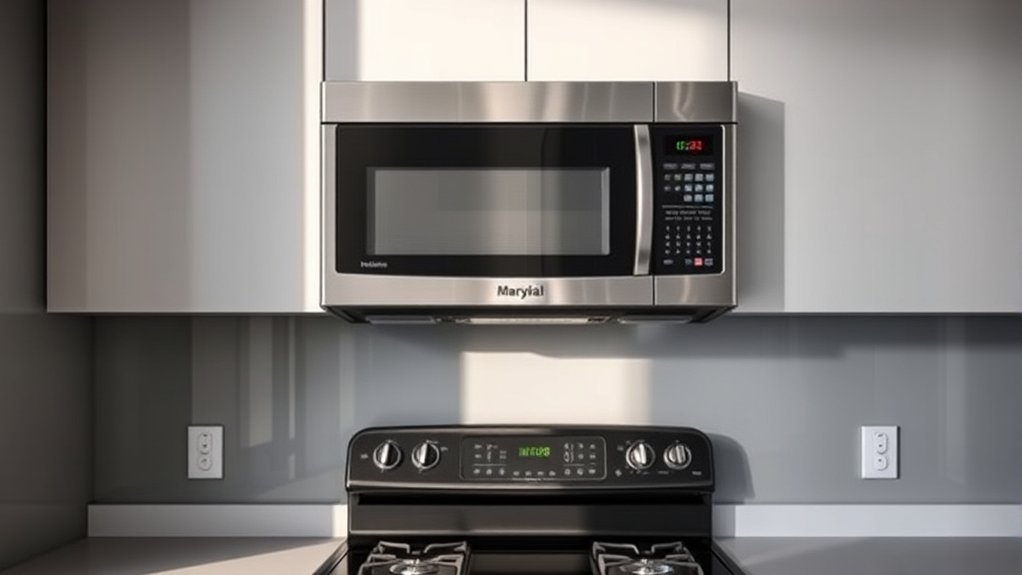
How deep should your above range microwave be to fit perfectly and function efficiently? Typically, these microwaves range from 14 to 16 inches in depth, which balances interior cooking space and proper ventilation.
When planning your installation, avoid topic drift by not confusing depth with unrelated dimensions like width or height—they matter, but depth directly affects how the microwave aligns with your cabinetry and range.
If it’s too shallow, your microwave might lack cooking space and look awkward; too deep, and it could protrude excessively, disrupting your kitchen’s flow and possibly interfering with cabinet doors or wall space.
Also, consider the microwave’s depth including the door handle and any rear components, as these add to the total measurement.
Measuring carefully ensures your microwave sits flush, operates safely, and complements your kitchen’s design without unexpected fit issues. Stay focused on depth to get a precise fit that works seamlessly.
Clearance Space Above the Microwave
Once you’ve nailed the right depth for your above range microwave, the next step is to contemplate the clearance space above it. This space is crucial for ventilation, aesthetics, and placement safety. You need enough room to ensure proper airflow, preventing overheating and maintaining the microwave’s efficiency. Generally, manufacturers recommend at least a few inches of clearance above the unit to allow heat and steam to escape freely.
Ignoring this can compromise ventilation, causing your microwave to work harder and reducing its lifespan. Plus, proper clearance enhances placement safety by minimizing fire hazards and ensuring the microwave isn’t crammed into a tight spot. From a design perspective, thoughtful clearance keeps the installation visually balanced, avoiding a cluttered or cramped look.
Required Clearance Below the Microwave
Why does the space below your above range microwave matter? This clearance is essential for both functionality and safety. You need enough room to accommodate various stovetop cookware and guarantee steam and heat don’t damage the microwave or surrounding cabinetry. Proper clearance also supports wide compatibility with different cookware sizes and cooking styles, giving you flexibility in the kitchen.
Additionally, the space below affects door aesthetics and usability. If the microwave sits too low, the door might feel cramped or awkward to open, detracting from your kitchen’s clean look and ease of use. Maintaining the right clearance preserves the sleek appearance of your microwave while allowing the door to open smoothly without obstruction.
Door Swing and Handle Clearance for Above Range Microwaves
Where does your microwave door need room to open comfortably? The door swing is crucial because it affects how easily you can access the microwave interior. Above range microwaves typically have doors that swing to the left or right, so you’ll want to ensure there’s enough space on that side to fully open the door without obstruction.
Ensure your microwave door swings freely to the left or right for easy access and no obstructions.
Handle clearance is equally important. Since the handle extends from the door, you need to consider how much space it requires beyond the microwave’s body. This clearance ensures you can grab the handle without bumping into cabinets, walls, or adjacent appliances.
Measure the full door swing distance, including the handle, to avoid cramped conditions that make loading or unloading dishes difficult. Planning for proper door swing and handle clearance helps maintain smooth kitchen workflow and prevents damage to your microwave or surrounding cabinetry.
Always check your specific microwave model’s dimensions to accommodate the required space accurately.
Ventilation and Duct Size for Above Range Microwaves
To keep your kitchen free of smoke and odors, make sure your over-the-range microwave is properly ventilated. Most models use 3- or 4-inch ducts, but check your microwave’s specifications and your setup to confirm the right size. A properly sized duct helps the microwave vent effectively and safely.
Proper Ventilation Requirements
How do you ensure your above range microwave vents properly? Start by debunking common ventilation myths that can lead to poor airflow and reduced efficiency. Proper duct routing is crucial—make sure ducts run as straight and short as possible to maximize exhaust power.
Here’s what to keep in mind:
- Use rigid metal ducts for better airflow and durability.
- Avoid sharp bends or long duct runs that hinder ventilation.
- Ensure the vent exhausts outdoors, not into an attic or crawlspace.
- Check that duct size matches the microwave’s ventilation specifications.
- Regularly clean ducts and filters to prevent buildup and maintain performance.
Following these tips ensures your microwave ventilates effectively, protecting your kitchen from smoke and odors.
Standard Duct Size Options
Proper ventilation depends not only on duct placement and cleanliness but also on selecting the right duct size. When choosing standard duct size options for your above range microwave, consider duct sizing carefully to ensure optimal airflow and performance.
Common duct sizes include 3¼ inches by 10 inches rectangular ducts or 6-inch round ducts. These sizes typically align with manufacturers’ installation clearance requirements, helping you avoid airflow restrictions.
Using the correct duct size minimizes noise and maximizes exhaust efficiency. If your installation clearance is tight, opting for the recommended duct dimensions is crucial to prevent backdrafts or ventilation issues.
Proper duct sizing ensures your microwave vent operates safely and effectively in your kitchen setup.
Frequently Asked Questions
What Is the Average Power Consumption of Above Range Microwaves?
You’ll find the average power consumption of above range microwaves is typically between 900 and 1,200 watts. This power level guarantees your meals cook quickly while not overloading your kitchen lighting circuits. When using these microwaves, the built-in kitchen lighting adds convenience without considerably increasing overall energy use. So, you can rely on the microwave’s efficient average power to handle cooking tasks without worrying about excessive electricity consumption.
How Do Above Range Microwaves Affect Kitchen Lighting?
Brightening your busy cooking space, above range microwaves boost kitchen lighting by blending built-in bulbs with your overhead lights. You’ll find these microwaves conveniently cast clear, concentrated light directly onto your stovetop, cutting shadows and creating a crisp cooking environment. This clever combination enhances visibility, so you can monitor meals with more precision and safety. Don’t forget, the quality and brightness of kitchen lighting can vary between models, so choose wisely!
Are Above Range Microwaves Compatible With Smart Home Systems?
Yes, many above range microwaves are compatible with smart home systems, letting you enjoy smart thermostat compatibility and voice control integration. You can easily connect them to platforms like Alexa or Google Assistant, so you don’t have to stop cooking to adjust settings. This integration helps streamline your kitchen tasks, making it more convenient to control your microwave hands-free while managing other smart devices in your home.
What Are Common Materials Used for Above Range Microwave Exteriors?
You’ll often find above range microwaves dressed in stainless steel, symbolizing strength and modernity in your kitchen’s rhythm. This material resists fingerprints and heat, keeping your space sleek and spotless.
Cabinet grade finishes blend seamlessly with your cabinetry, creating harmony between appliances and design. These materials don’t just protect your microwave—they elevate your cooking space, turning everyday tasks into a smooth, stylish dance you’ll enjoy every day.
How Do Above Range Microwaves Impact Kitchen Noise Levels?
Above range microwaves can increase noise levels in your kitchen, so noise considerations are important. You’ll want to pick a model with quieter operation if you value a peaceful cooking space.
Also, keep cabinet compatibility in mind—some microwaves fit better and run smoother, reducing rattling sounds. By choosing the right microwave for your cabinet size and focusing on quieter features, you’ll keep your kitchen noise manageable while enjoying convenience.
Conclusion
Think of installing your above range microwave like fitting a puzzle piece into your kitchen’s story. Knowing the right width, height, and clearance helps it slide into place smoothly. Don’t forget the door swing and ventilation; they keep the microwave accessible and working properly.
Get these dimensions right, and your above range microwave won’t just fit; it’ll harmonize with your kitchen’s rhythm.