
What Temp Should Your Freezer Be?
Worried that your freezer isn’t cold enough—or that your food is losing quality? You’re not alone. Many people struggle to find the right setting, verify the actual temperature, and store food efficiently. This guide will help you keep your freezer at the ideal temperature.
Set your freezer to 0°F (-18°C) or colder to keep food safely frozen and preserve its quality. Check the actual temperature with an independent appliance thermometer, placing it in the center and leaving it in overnight before checking.
Keep the freezer 70–85% full without blocking vents, and limit door openings to reduce temperature swings. Inspect seals, remove excess frost, and clean condenser coils regularly.
Keep going to learn how to handle fluctuations, food safety, and efficient freezer storage.
Key Takeaways
- Set your freezer to 0°F (-18°C) or colder to keep food safely frozen and preserve quality.
- Verify the temperature with an independent appliance thermometer, placed in the center overnight.
- Wait 24 hours after adjusting the setting, then recheck the actual temperature.
- Keep the freezer 70–85% full while leaving space around packages for proper air circulation.
- Check door seals, remove excess frost, and clean condenser coils if temperatures fluctuate.
What Temperature Should Your Freezer Be?
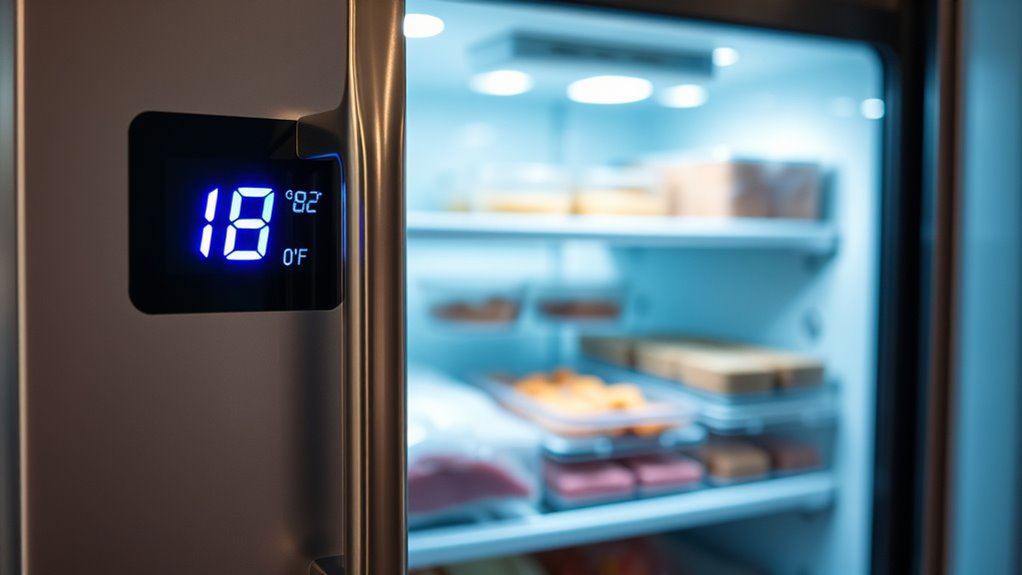
Your freezer should be set to 0°F (-18°C) or colder to keep food safely frozen and maintain its quality. Use the appliance’s control panel or dial to select this setting, then place an independent thermometer inside to verify the actual temperature.
Built-in displays can be inaccurate, especially after you add groceries or open the door frequently.
Keep the door closed as much as possible, and don’t pack items so tightly that cold air can’t circulate. Food organization helps you find items quickly, reducing the time you leave the door open.
Store newer packages behind older ones, label leftovers with dates, and discard anything that shows signs of thawing or freezer damage.
For energy conservation, check the door seal, remove excess frost, and keep the freezer away from heat sources.
If the temperature rises above 0°F, adjust the setting and inspect the seal or ventilation. A consistently cold, orderly freezer protects your food and operates efficiently.
Why Is 0°F the Best Freezer Temperature?
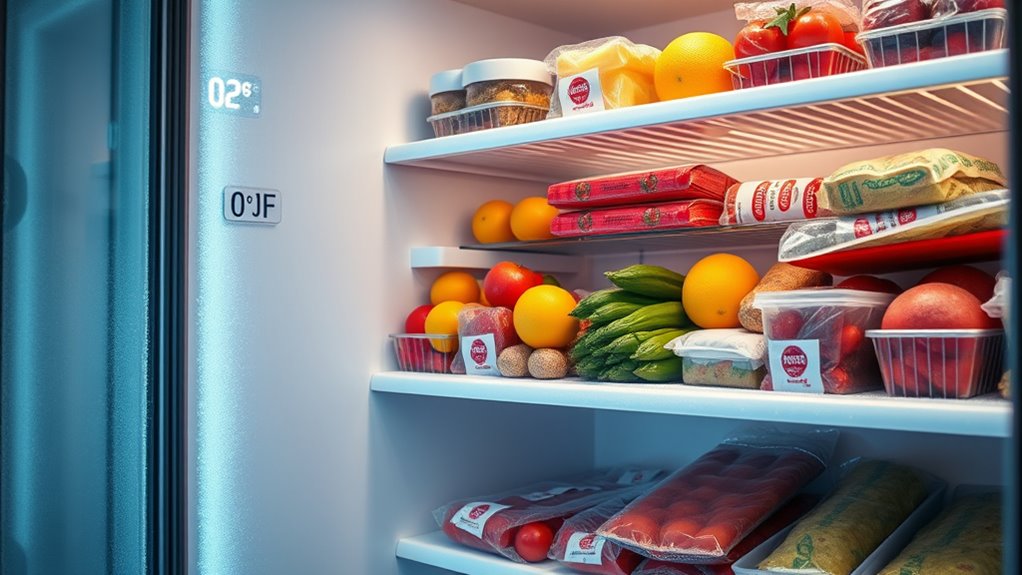
At 0°F (-18°C), water in food stays frozen, slowing bacterial growth and the chemical reactions that cause spoilage. This temperature gives you dependable cold storage, helping food retain its flavor, texture, nutrients, and quality for longer.
At 0°F, frozen food stays safer and fresher longer while preserving its flavor, texture, nutrients, and quality.
It also creates a safety margin when you open the door, add groceries, or experience brief temperature changes.
At this setting, you’ll protect:
- Meat, poultry, and seafood from rapid quality loss
- Frozen fruits and vegetables from excessive ice crystals
- Prepared meals from premature spoilage
- Ice cream from softening and refreezing damage
Freezer myths often suggest that colder always means better. However, extremely low settings can waste energy without meaningfully improving food safety.
Keeping your freezer at 0°F balances preservation, efficiency, and practical performance. You’ll also reduce freezer burn when you package food tightly, remove excess air, and avoid storing items indefinitely.
Although frozen food can remain safe for a long time, its quality gradually declines. By maintaining 0°F consistently, you’ll create a reliable environment that keeps everyday staples wholesome, appealing, and ready to use.
How Can You Check Freezer Temperature?

How can you tell whether your freezer is really at 0°F? Use a freezer thermometer to get an accurate reading instead of relying on the appliance’s display or a guess. Choose a model designed for subzero temperatures, and check that it’s easy to read.
Place it in a stable area inside the freezer, then close the door and let the reading settle for several hours. Avoid checking immediately after adding groceries or opening the door repeatedly, since warm air can temporarily affect the result.
Read the thermometer when the freezer has remained closed, and compare the result with the recommended 0°F setting. If it’s warmer, adjust the controls gradually and recheck later.
If the temperature fluctuates widely, inspect the door seal, airflow, and frost buildup. Consistent readings support food safety, energy efficiency, and better storage organization.
Record occasional readings so you’ll notice changes before frozen food begins to soften.
Where Should You Place a Freezer Thermometer?
Place your freezer thermometer near the center, away from the walls, door, and vents. This spot gives you a more reliable reading of the area where your food is stored.
You’ll also learn how to check its accuracy so you can count on the temperature readings.
Ideal Thermometer Placement
For the most accurate reading, place the freezer thermometer in the center of the main compartment, away from the walls, door, vents, and cooling coils. This location reflects the air surrounding your frozen food rather than a spot affected by direct cold or warm air.
Choose a readable model that hangs or stands securely without touching food packages.
- Keep it at mid-shelf height.
- Leave space around it for airflow.
- Don’t place it inside the door.
- Avoid contact with containers or liners.
Good freezer insulation helps maintain a steady environment, but crowded shelves can block circulation. If your appliance has separate compartments, position the thermometer in the section you use most.
Follow the manufacturer’s placement guidance, and keep in mind that thermometer calibration affects reliability. Secure the device so it won’t shift when you load or remove food.
Checking Temperature Accuracy
To check a freezer thermometer’s accuracy, put it in the center of the main compartment, away from walls, vents, coils, and the door. This location reflects the temperature surrounding your food rather than a misleading hot or cold spot.
Close the freezer and leave the thermometer undisturbed for at least 12 hours, preferably overnight. Check the reading before opening the door for long.
Your freezer should typically stay at 0°F (-18°C). If the thermometer differs from your freezer’s display, compare both readings over several checks.
Temperature calibration may be necessary if the thermometer consistently reads high or low. Follow its instructions or replace it.
During freezer defrosting, remove the thermometer to prevent moisture damage. Return it after the freezer reaches its normal operating temperature and stabilizes.
Why Does Freezer Temperature Change?
Why Does Freezer Temperature Change?
Freezer temperature changes when warm air enters, the door stays open, or the appliance works harder than usual. Every fluctuation makes your freezer use more energy as it restores its target temperature.
Several everyday factors can cause these shifts:
- Frequent door openings let cold air escape and humid air enter.
- Newly added food temporarily raises the interior temperature.
- Frost buildup blocks airflow and makes cooling less consistent.
- An overpacked compartment prevents cold air from circulating properly.
Room conditions also matter. A freezer in a hot garage must run longer, while poor ventilation around the appliance can trap heat and reduce performance.
Changes in Energy efficiency may appear when aging seals allow small air leaks or when the compressor cycles more often. You might notice a brief rise after loading groceries, but steady swings suggest an underlying condition worth monitoring.
Keep your freezer’s surroundings reasonably cool, leave space around packages for airflow, and check the door seal regularly to support stable temperatures without wasting electricity or stressing the appliance.
How Can You Fix a Warm Freezer?
When your freezer feels warm, start by checking the door seal, airflow, and temperature setting. Set the thermostat to 0°F (-18°C), then wait several hours for the interior to stabilize.
Close the door firmly and inspect the gasket for cracks, gaps, or food blocking the seal. Clean the gasket with warm, soapy water and replace it if it remains loose.
Keep packages away from interior vents, and leave space around the walls so cold air can circulate. Remove heavy frost that restricts airflow, following your model’s defrost instructions.
Vacuum dust from the condenser coils, usually beneath or behind the unit, and confirm the condenser fan can spin freely. Unplug the freezer before cleaning or servicing accessible parts.
For energy conservation, ensure the freezer sits away from heat sources and has adequate clearance. For noise reduction, level its feet and check that tubing or panels aren’t vibrating.
If it still runs constantly, won’t cool, or shows an error, contact a qualified technician.
When Is Frozen Food Still Safe?
Keep your freezer at 0°F (-18°C) or below to help keep frozen food safe. Before eating, check for signs of spoilage, such as unusual odors, discoloration, or severe freezer burn. Follow recommended storage times, and don’t eat food that has thawed, spoiled, or been stored too long.
Safe Freezing Temperatures
Your freezer should stay at 0°F (-18°C) or below to keep food safely frozen and limit bacterial growth. At this temperature, you’ll protect quality while supporting reliable Food preservation.
Use a separate appliance thermometer because built-in displays can be inaccurate. Check the reading regularly, especially after power interruptions or heavy loading.
- Keep the door closed during outages to retain cold air.
- Freeze food promptly rather than letting it sit at room temperature.
- Leave space between packages so cold air can circulate.
- Label items with dates and rotate older packages forward.
For Energy conservation, set the freezer no colder than necessary. Maintain a full but not tightly packed interior, and inspect the door seal.
When food partially thaws, refreeze it only if it still contains ice crystals or has stayed at 40°F (4°C) or below. Follow local food-safety guidance for uncertain situations.
Signs Of Spoilage
Frozen food can remain safe after minor ice buildup or freezer burn, but discard it if it smells unusual, feels slimy after thawing, or shows mold, leaking packages, or extensive discoloration. Trust your senses, and don’t taste questionable food to test it.
Check for torn seals, swollen containers, or liquid that escaped and refroze, since these signs may indicate contamination or temperature abuse.
If food partially thawed during a power outage, handle it cautiously. Discard anything that stayed above safe refrigeration temperature for too long, especially if you’re unsure how long it warmed.
Keep your freezer cold and organized to support food preservation and energy efficiency. Clean spills promptly, and separate damaged packages from other food.
When in doubt, throw it out. Saving one item isn’t worth risking illness.
Storage Time Limits
Storage time limits depend on the food, packaging, and whether it has stayed continuously frozen at 0°F (-18°C) or below. Freezing keeps food safe indefinitely, but quality declines over time. Use these general guidelines:
- Ground meat and poultry: three to four months
- Steaks, roasts, and chops: four to twelve months
- Cooked meat and poultry: two to six months
- Fruits, vegetables, and prepared meals: eight to twelve months
Check packages for freezer burn, torn seals, unusual odors after thawing, or sticky textures. Freezer burn affects taste and texture, but it doesn’t automatically make food unsafe.
Thaw food safely in the refrigerator, cold water, or microwave, never on the counter. Label every package with its freezing date, and rotate older items forward.
Maintaining 0°F supports food safety. Energy efficiency improves when you avoid frequent door openings.
When Should You Adjust the Freezer Setting?
Adjust the freezer setting when its temperature rises above 0°F (-18°C), ice crystals form on food, or items remain too soft. Check the temperature with an appliance thermometer before making changes, since the built-in display may not reflect actual conditions.
> Check the freezer’s actual temperature before adjusting the setting, especially when food remains soft or ice crystals appear.
Lower the setting slightly if the freezer stays warmer than 0°F. Wait about 24 hours, then check again. If food becomes excessively hard, develops freezer burn quickly, or the temperature falls well below the recommended point, raise the setting by one increment.
Make gradual adjustments instead of turning the control sharply.
Open the door briefly and inspect the seal if temperatures fluctuate. A damaged gasket, blocked vent, or frequent door openings can cause problems that changing the setting won’t solve.
Frost buildup can also restrict airflow, so defrost the freezer when ice becomes thick. Choose the warmest setting that safely maintains 0°F for energy efficiency, but contact a technician if stable temperatures remain impossible.
How Full Should Your Freezer Be?
Keep your freezer about 70% to 85% full to maintain steady airflow while allowing cold air to circulate around the food. This balance supports consistent temperatures and reliable Food preservation without crowding packages against vents or walls.
An overly empty freezer loses cold quickly whenever you open the door, which can increase Energy consumption as the appliance works to recover.
An overpacked compartment creates different problems: blocked airflow, uneven temperatures, and food that may not freeze safely or evenly. Use this guide:
- Leave small spaces between packages for air movement.
- Keep vents clear so cold air can circulate.
- Fill gaps with appropriately sized containers or freezer-safe water bottles.
- Avoid stuffing food tightly against the door seal.
Arrange items so you can see and reach them easily. Store newer packages behind older ones, and label each item with its contents and date.
If your freezer is nearly empty, grouping food together helps retain cold, but don’t pack it so tightly that air can’t move.
How Can You Keep Your Freezer Efficient?
Beyond loading your freezer properly, you can improve its efficiency by maintaining a steady temperature, limiting door openings, and cleaning the coils and door seal regularly. Set the thermostat near 0°F (-18°C), then use an appliance thermometer to verify accuracy.
Avoid placing hot food inside, because it makes the compressor work harder and raises the internal temperature.
Check the door gasket often. If it feels loose, cracked, or dirty, cold air can escape. Clean it with warm, soapy water and replace it when necessary.
Keep the exterior coils or vents free of dust, allowing heat to dissipate efficiently. If your model has manual defrosting, remove frost buildup when it reaches about a quarter-inch.
Excess ice reduces storage space and forces the appliance to run longer.
For better energy efficiency, keep the freezer away from ovens, direct sunlight, and unheated areas. Don’t leave the door open while deciding what to retrieve, and organize contents so you can find items quickly.
Frequently Asked Questions
Can Freezing Food Destroy Bacteria and Other Harmful Microorganisms?
Freezing doesn’t reliably destroy bacteria or other harmful microorganisms; it mainly stops their growth. You create microbial dormancy, allowing many bacteria, viruses, and parasites to survive until thawing.
Freezing efficacy varies by organism, food, temperature, and storage duration. You should handle frozen food safely because surviving microbes can become active again as it warms.
Cook foods thoroughly after thawing, prevent cross-contamination, and don’t treat freezing as a substitute for proper cooking, sanitation, or refrigeration.
How Should You Organize Foods Inside Your Freezer?
Organize your freezer like a tiny, roaring grocery store: every item should have a clear aisle, shelf, and address. For efficient Frozen storage, keep frequently used foods near the front and group similar items together.
Put raw meat, poultry, and seafood in sealed containers on the lowest shelf to prevent leaks. Store ready-to-eat foods above them.
Use labeled bags, remove excess air, rotate older packages forward, and avoid overpacking. This Food placement keeps everything safer and easier to find.
What Types of Containers Prevent Freezer Burn?
You’ll prevent freezer burn by choosing containers with excellent air tightness. Use rigid, freezer-safe plastic containers for soups, sauces, and leftovers, leaving a little room for expansion.
Heavy-duty glass containers also work, provided they’re labeled freezer-safe and you avoid thermal shock. For meats and dry foods, use vacuum-seal bags or thick freezer bags, pressing out excess air.
Among container materials, avoid thin packaging, which allows moisture loss and ice crystals to develop.
How Long Can Ice Cream Remain Safely Stored in a Freezer?
You can safely store unopened ice cream in your freezer for about two to four months for best quality. Once opened, aim to finish it within one to two months.
It may remain safe longer if continuously frozen, but texture and flavor can deteriorate. For better flavor preservation, keep it tightly sealed, minimize temperature changes, and prevent freezer burn.
Check for unusual odors, severe crystallization, or a slimy texture before eating.
Should You Defrost a Freezer Regularly, and How Often?
Yes, you should defrost your freezer regularly when frost exceeds ¼ inch, because thick ice reduces storage space and makes the appliance work harder. About 60% of freezer energy use can go toward maintaining cold air, so efficient care matters.
For effective freezer maintenance, defrost manual models every six to twelve months, or sooner if frost builds quickly. Frost-free units usually don’t need manual defrosting.
Check temperature calibration afterward to confirm safe, consistent cooling.
Conclusion
Set your freezer to 0°F to keep food safely frozen and preserve its quality. Check the temperature with an appliance thermometer, place it near the center, and adjust the setting when needed.
You don’t need a packed freezer to make it efficient. Just leave enough space for cold air to circulate. Even if opening the door seems harmless, each warm gust slows recovery.
Keep it organized, limit door openings, and your freezer will stay a reliable, icy pantry at the right freezer temperature.